Is Advanced eClinical Training Worth the Cost? A Transparent Look at Cost, What’s Included, and Career ROI
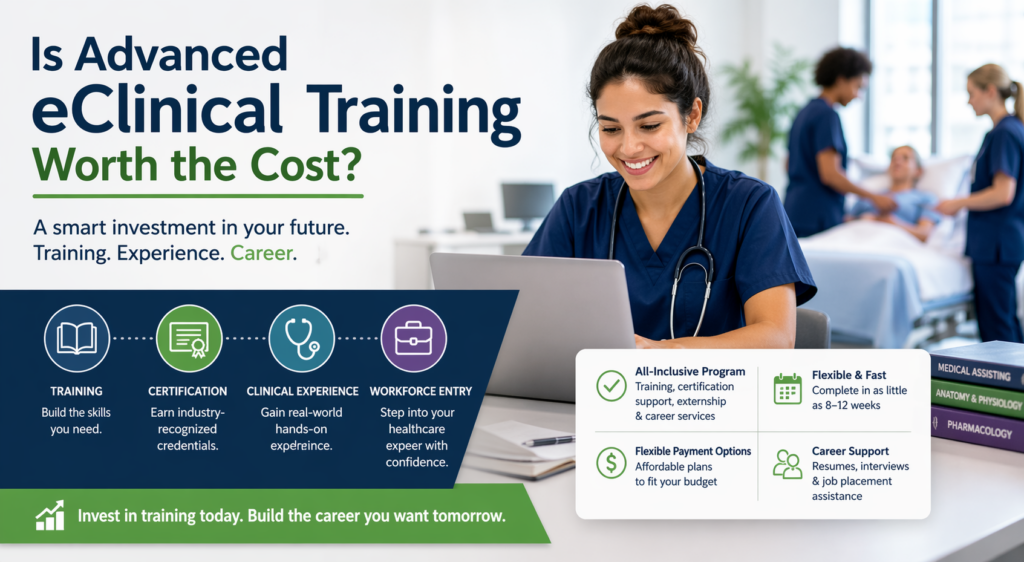
Yes, Advanced eClinical Training is worth the cost, especially for students who are looking for a complete path from training to employment.
The structure follows a clear path: training → certification → clinical experience → workforce entry
This includes certification-focused training, exam support, externship coordination, career services, and flexible payment options, all built into one system.
The goal is to help students complete training and move into a healthcare role more efficiently.
How Much Does Advanced eClinical Training Cost?
ACT programs are typically priced under $4,000, with training, clinical experience, and career support built into one program.
When evaluating is Advanced eClinical Training worth the cost, it helps to look at how that investment translates into real outcomes, like how quickly you can complete training and start working.
A more useful way to think about it is: What do you get for the cost, and how efficiently can it help you move into a healthcare role?
ACT is designed to help you focus on what matters most:
- What’s included in the program
- How you can pay for it
- How quickly you can finish
- How soon you can move into a job
- What kind of support you receive along the way
What Does Advanced eClinical Training Include?
ACT is set up so that key parts of the process are included in one program, instead of leaving you to figure things out on your own.
This can include:
- Training that prepares you for certification and real job tasks
- Practice through simulations to build hands-on skills
- Help finding an externship instead of searching for one yourself
- The chance to get real clinical experience
- Support with your resume, interviews, and job search
- Guidance from instructors and mentors
Instead of doing everything separately, the goal is to give you a clear path: Training → Certification → Experience → Getting a Job
Is Advanced eClinical Training Worth the Cost Compared to Other Programs?
Yes, ACT is designed to give students a more complete path into the workforce, with built-in training, clinical experience, and career support.
When comparing programs, focus on:
- What is included in tuition
- Whether clinical experience is supported
- How quickly the program can be completed
- What level of career support is available
Lower-cost programs may reduce upfront price, but may not include:
- Exam-related support
- Externship coordination
- Career services
Key Facts About Advanced eClinical Training Cost and Outcomes
- Programs are commonly priced under $4,000
- Short-term payment plans may include 0% interest
- Monthly payment options are typically split into 2–3 payments
- Programs are designed for completion in about 8–12 weeks depending on pacing
- Flexible timelines may extend up to 12 months
- Externship coordination is supported across more than 1,000 healthcare partner sites
- Students may complete up to 160 verified clinical hours
- Reported CCMA exam pass rate is 99%
- Reported program completion rate is 95%
- Reported job placement occurs within 2 months for 95% of graduates
How Long Does ACT Take to Complete?
Programs are designed to be completed in:
- 8 to 12 weeks depending on pacing
- Up to 12 months with flexible scheduling
How Fast Can Advanced eClinical Training Help You Get a Job?
Return on investment is closely tied to how quickly training leads to employment.
ACT emphasizes:
- Workforce-aligned training
- Faster transition into entry-level healthcare roles
- Career services and externship support
Reported outcomes indicate that 95% of graduates obtain employment within two months.
Payment Options for Advanced eClinical Training
Affordability is not just about price. It is also about structure.
ACT offers:
- Short-term payment plans with 0% interest
- Monthly payment options
- No credit check for short-term internal plans
Can You Use WIOA or Workforce Funding for ACT?
ACT is approved on several state Eligible Training Provider Lists.
This may allow access to Workforce Innovation and Opportunity Act funding for eligible students.
Important:
- Funding eligibility is determined by local workforce agencies
- Not all students will qualify
ACT also aligns with workforce development initiatives and employer-supported training pathways.
→ Check ETPL and WIOA Pathways
Employer, Military, and Sponsored Student Pathways
Some students may be able to get help paying for training through:
- Employer tuition reimbursement programs
- Local workforce or job training programs
- Military education benefits, such as Army Credentialing Assistance or Air Force COOL
- Programs connected to Department of Labor registered apprenticeships
Outcomes That Matter: Understanding Career ROI
ACT’s model is built around outcome-focused training.
Reported outcomes include:
- 99% CCMA exam pass rate
- 97% first-attempt pass rate
- 95% program completion rate
- 100% externship placement satisfaction
- 95% job placement within 2 months
- More than 1,000 healthcare partner sites
- Up to 160 verified clinical hours
Why Externship Experience Changes ROI
Externship coordination and placement support is one of the most important factors in evaluating value.
ACT supports:
- Coordination across more than 1,000 healthcare partner sites
- Up to 160 verified clinical hours
For Career Changers
- Helps bridge the gap between training and employment
- Improves job readiness and confidence
For Pre-Health Students
- Supports Patient Care Experience and Healthcare Experience
- Aligns with expectations from organizations such as AAMC and AAPA
Externi Platform and Structured Clinical Experience
ACT manages its externship process through a platform called Externi, which helps keep everything organized while you complete your clinical experience.
Externi supports:
- Coordinating externship placements
- Tracking your progress and clinical hours
- Managing required documents
- Creating verifiable records of your experience
Instead of figuring everything out on your own, your clinical experience is tracked and documented in a structured way, making it easier to show to employers or graduate school programs.
A Structured Pathway for Pre-Health Students
ACT is designed as a career advancement pathway, not just a standalone course.
The 5-Step Pathway
- Start with CCMA
- Gain externship experience
- Stack credentials such as EKG or Phlebotomy
- Upskill by specialty
- Add mentorship
Certification helps you qualify. Experience and mentorship help you compete.
Who Is ACT Best For?
For Pre-Med Students
- Need meaningful clinical exposure
- Must build a strong application narrative
- Benefit from mentorship and structured experience
For Pre-PA Students
- Require high-volume Patient Care Experience
- Benefit from fast entry into clinical roles
- Need verified hours and career alignment
For Pre-Nursing and General Pre-Health Students
- Want early hands-on experience
- Build confidence before clinical training
- Develop foundational healthcare skills
For Career Changers
- Need a structured and faster path into healthcare
- Value job readiness and career support
- Prefer guided transition into a new field
Reinforcing the Decision Framework
When evaluating whether ACT is worth it, return to these key factors:
- Total value over sticker price
- Flexible ways to pay
- What is included in tuition
- Speed to completion
- Speed to workforce entry
- Workforce alignment and funding access
- Career and application support
This framework defines real return on investment.
Final Takeaway
ACT is designed for budget-conscious, cost-aware students who want to look beyond just tuition and focus on total value.
For those students, the value comes from:
- What is included
- How quickly they can complete training
- How effectively the program supports their next step
All-inclusive training, faster timelines, real clinical experience, and structured career support define the ROI.
FAQs about Advanced eClinical Training
Yes, ACT is designed as an all-in-one program, which includes support with the certification process, such as exam-related costs and registration. Details vary by program.
You may be able to use WIOA funding, depending on where you live and whether you qualify. ACT is approved on some state training lists, but you’ll need to confirm with your local workforce office.
Programs are typically designed to be completed in 8 to 12 weeks depending on pacing, with flexibility up to 12 months.
ACT does not just leave you on your own after training. It includes support with things like building your resume, preparing for interviews, and helping you understand how to apply for healthcare roles.
You also gain clinical experience through an externship, which can make it easier to show employers that you have real, hands-on experience.
ACT can support pre-health students by helping them build clinical experience, stack credentials, and access mentorship resources.
ACT programs are usually priced under $4,000, depending on the program. What matters most is what’s included, how quickly you can finish, and how soon you can start working.
ACT includes externship coordination, which can help you gain real clinical experience and verified hours. This hands-on experience can make you more prepared for jobs or future healthcare programs.
Most ACT programs are designed for beginners, including career changers and students starting their healthcare journey. No prior clinical experience is typically required.
After completing the program, you’ll have your training, certification preparation, and clinical experience. You’ll also have support to help you move into the job search process and apply for healthcare roles.