No Clinical Hours After Graduation: How Pre-Health Students Can Build Clinical Experience Fast (Step-by-Step Guide for PA and Medical School)

You graduated. Cap is off, diploma is in hand — and suddenly the path to PA school or medical school looks a lot steeper than it did in the college catalog. The culprit? Clinical hours. That one mountain standing between “pre-health graduate” and “competitive applicant.”
If you’re staring at a blank log sheet wondering where to even begin, you are not alone — and you are not behind. You just need the right plan.
This guide breaks down exactly what to do, step by step, after graduation if you have zero clinical hours — including the fastest, most strategic way to build verifiable, application-grade clinical experience that PA programs and medical schools actually value.
Clinical hours are required for both physician assistant and medical school applications.
Most competitive PA applicants have over 3,000 hours of patient care experience, while medical school applicants typically have 200–500 hours of clinical exposure.
The fastest way to gain clinical hours is through certified, patient-facing roles such as medical assistant, phlebotomy technician, or patient care technician, supported by structured approved training and pre-health mentorship.
What Are Clinical Hours and Why Are They Required?
Clinical hours refer to hands-on or observational experience in healthcare settings where students gain exposure to patient care, clinical workflows, and provider decision-making.
For physician assistant applicants applying through CASPA, clinical hours are primarily categorized as Patient Care Experience (PCE) and are a core admissions requirement.
For medical school applicants using AMCAS, clinical experience is used to assess:
- Commitment to the field of medicine
- Ability to interact with patients
- Understanding of real-world healthcare environments
According to the Association of American Medical Colleges, clinical exposure is essential for demonstrating readiness for medical training and patient-centered care.
Why Clinical Hours Are Non-Negotiable
Clinical experience is not a supplemental component of your application—it is foundational. Let’s be direct: you cannot skip this.
According to the American Association of Physician Associates and the Physician Assistant Education Association, accepted PA students average over 3,000 hours of direct patient care experience (PCE).
According to the American Association of Physician Associates (AAPA), most PA programs require hands-on patient care experience before admission, and data from the Physician Assistant Education Association (PAEA) shows that accepted students average 3,235 Patient Care Experience (PCE) hours — not 500, not 1,000 — over 3,000 hours.
For medical school applicants, the AAMC is equally clear: clinical experience demonstrates that you understand what working in healthcare actually entails, that you’re committed to your career path, and that you can thrive in high-stakes environments.
And the numbers prove just how high the stakes are:
- PA school overall acceptance rate: ~20% — lower than medical school (Advanced eClinical Training / PAEA)
- Duke University PA Program acceptance rate: 2.3%
- Baylor College of Medicine PA Program: 3.7%
- George Washington University PA Program: 6%
The bottom line: Clinical hours are not optional. They are the foundation of your application. But hours alone won’t get you in — strategy, documentation, narrative, and expert guidance are what separate accepted students from rejected ones.
How Many Clinical Hours Do You Need to Be Competitive?
PA School Clinical Hour Benchmarks
Most PA programs require:
- Minimum: 500–2,000 hours
- Competitive: 3,000–4,000+ hours
Data from the Physician Assistant Education Association shows accepted applicants average over 3,000 hours of PCE.
Medical School Clinical Experience Benchmarks
Medical schools do not enforce strict hour requirements but expect:
- 200–500+ hours of clinical exposure
- Consistent involvement over time
- Direct or meaningful patient interaction
The emphasis is on quality, reflection, and continuity, not just volume.
Step 1: Understand What Counts — PCE vs. HCE
Before you start logging hours at a hospital gift shop, you need to understand a critical distinction that confuses thousands of applicants every year: PCE (Patient Care Experience) vs. HCE (Healthcare Experience).
Patient Care Experience (PCE)
Direct patient care experience is defined as hands-on interaction where you are responsible for patient care tasks. CASPA — the centralized application service used by 95% of accredited PA programs — defines PCE as experience where you are directly responsible for a patient’s care.
This includes:
- Taking vital signs
- Assisting with procedures
- Collecting patient histories
- Administering treatments
Common qualifying roles include:
- Certified Nursing Assistant (CNA)
- Emergency Medical Technician (EMT)
- Medical Assistant
- Phlebotomist
- Patient Care Technician
PA schools highly value this experience because it demonstrates your ability to handle real-world medical situations and your commitment to the healthcare profession. Whether you are taking vital signs, administering medications, or assisting with daily living activities, each interaction helps build a solid foundation for your future career as a PA.
Patient care experience (PCE) is experience where you are directly responsible for a patient’s care. For example, prescribing medication, performing procedures, directing a course of treatment, designing a treatment regimen, actively working on patients as a medical assistant, patient care technician, EKG tech, CNA, phlebotomist etc. — AAPA
Examples include medical assistants, phlebotomists, EMTs, and patient care technicians.
Healthcare Experience (HCE) — Valuable, But Not PCE
CASPA defines HCE as work in a health field where you’re not directly responsible for a patient’s care — including scribing, clerical work, delivering patient food, filling prescriptions, or taking vitals in some contexts.
Includes exposure to healthcare settings without direct patient responsibility:
- Scribing
- Administrative roles
- Clerical support
The American Association of Physician Associates emphasizes that PCE is significantly more valuable for PA school admissions.
The takeaway: Focus on building PCE hours, not just any clinical exposure. And make sure you document and categorize them correctly — which is exactly the kind of nuance an experienced mentor can help you navigate.
The Hierarchy: What Counts and What Doesn’t
| ✅ Direct Patient Care (PCE) | ❌ NOT PCE — Healthcare Experience (HCE) |
|---|---|
| Performing vital signs, injections, EKGs | Answering phones at a clinic |
| Blood draws and specimen collection | Scheduling patient appointments |
| Wound care and dressing changes | Delivering patient meals |
| Patient intake and clinical histories | Medical scribing (in most programs) |
| EMT emergency response and transport | Pharmacy dispensing |
| CNA activities of daily living assistance | Hospital volunteering (non-clinical) |
| Medical assistant clinical duties | Stocking medical supplies |
| EKG electrode placement and monitoring | Administrative charting |
Patient Care Experience for PA School
PA school admissions normally require a minimum of six months of full-time work in healthcare, with 1,000 hours or more of hands-on patient care experience and/or community service in a healthcare setting. This or healthcare related experience could be in:
- a hospital
- a clinic
- a laboratory
- an ambulatory surgical center
- a long-term care facility
- or other similar places
This requirement ensures that aspiring physician assistants possess the necessary background and skills to excel in their chosen profession. It is crucial to accumulate these specific health care experience hours by the time of application submission.
Why This Distinction Matters More Than You Think
Duke University’s PA Program warns applicants:
“Putting patient care in the wrong spot can mean shorting yourself hundreds or even thousands of hours. Conversely, if a school doesn’t count one experience and you list it in the PCE section, you can come across as trying to artificially inflate your hours.” — Duke School of Medicine
The takeaway: Focus on building PCE hours, not just any clinical exposure. And make sure you document and categorize them correctly — which is exactly the kind of nuance an experienced mentor can help you navigate.
Step 2: Know the Numbers — How Many Hours Do You Actually Need?
| Program Type | Minimum Requirement | Competitive Average |
|---|---|---|
| PA School | 500–2,000 hours (varies by program) | 3,000–4,000 hours |
| Medical School | 100–300+ hours shadowing + clinical | 200–500+ hands-on hours |
| Nursing Programs | 100–500 hours | Varies |
Sources: Admissions Helpers, Shemmassian Academic Consulting, Go Elective
According to Shemmassian Academic Consulting, accepted PA students average:
- Patient Care Experience (PCE): 3,235 hours
- Healthcare Experience (HCE): 1,470 hours
For pre-med students, the AAMC emphasizes quality and longevity over raw numbers — admissions officers want to see genuine commitment and the ability to articulate how clinical exposure shaped your motivation for medicine.
Step 3: Choose the Right Clinical Role for Your Path
The fastest, most strategic way to build verifiable clinical hours is to get a paid, certified clinical role. Here are the roles most valued by PA schools and medical school admissions committees:
Top PCE Roles for Pre-PA & Pre-Med Applicants
According to Admissions Helpers and the AAPA, the most highly regarded direct patient care roles include:
| Role | Experience Type | Why It’s Valued |
|---|---|---|
| Medical Assistant (CCMA) | PCE | Broad clinical exposure — vitals, injections, patient prep, EHR |
| Phlebotomy Technician (CPT) | PCE | Direct patient contact, high hiring demand |
| EKG Technician (CET) | PCE | Specialized skill, cardiology/urgent care access |
| Patient Care Technician (PCT) | PCE | Highly hands-on, hospital-based experience |
| EMT | PCE | Strong PCE, versatile across settings |
| CNA | PCE/HCE | Depends on facility and job duties |
How long does it actually take to accumulate enough clinical hours?
With a structured, full-time approach, here’s a realistic timeline:
| Target Hours | Full-Time (40 hrs/week) | Part-Time (20 hrs/week) |
|---|---|---|
| 500 hours | ~3 months | ~6 months |
| 1,000 hours | ~6 months | ~12 months |
| 2,000 hours | ~12 months | ~2 years |
| 3,000+ hours | ~18 months | ~3 years |
For a competitive application (3,000+ hours), plan on 1.5–2 years of clinical work if you begin immediately after graduation. The certification + externship pathway through ACT is one of the fastest ways to enter the workforce and start accumulating verified hours within 8–12 weeks of enrollment.
Medical Assistant (CCMA)
PCE Classification: Direct Patient Care
Medical assisting is one of the most strategically positioned roles a pre-PA student can pursue. It offers broad clinical exposure across virtually every ambulatory care setting and directly develops the full spectrum of skills PA admissions committees value.
Clinical duties that count as PCE:
- Patient intake and clinical history-taking
- Vital signs (blood pressure, temperature, pulse, respiration, O2 saturation)
- Phlebotomy and specimen collection
- Medication administration and patient education
- Wound care and dressing changes
- EKG/12-lead placement and basic cardiac monitoring
- Assisting providers during examinations and clinical procedures
- Electronic health records (EHR) documentation during patient encounters
Skills developed:
- Clinical workflow proficiency
- Patient communication and bedside manner
- Procedural competency across multiple disciplines
- Understanding of the collaborative PA/provider model firsthand
According to AllCMA’s analysis of MA experience for PA school:

8 weeks | Self-paced | Externship guarantee
Online Clinical Medical Assistant Certification
“YES, Medical Assistant experience typically DOES count as Patient Care Experience (PCE) for PA school — with some important caveats. Most PA programs recognize the clinical value of properly documented MA work, especially when it involves hands-on patient care. Research from the Physician Assistant Education Association shows that approximately 89% of accredited PA programs accept MA experience as PCE.”
Phlebotomy Technician (CPT)
PCE Classification: Direct Patient Care
Phlebotomy is one of the most universally recognized and frequently cited direct patient care roles for PA school applicants — and also one of the most strategically stackable certifications.
Clinical duties that count as PCE:
- Venipuncture (blood draws) from a variety of patient populations
- Pediatric, geriatric, and difficult-access draws
- Specimen labeling, handling, and chain of custody
- Patient identification verification and communication
- Point-of-care testing (in some settings)
- Lab protocol adherence and safety procedures
Skills developed:
- Procedural dexterity and precision
- Direct, consistent patient interaction
- Attention to detail and clinical accuracy
- Professional communication with anxious or medically complex patients
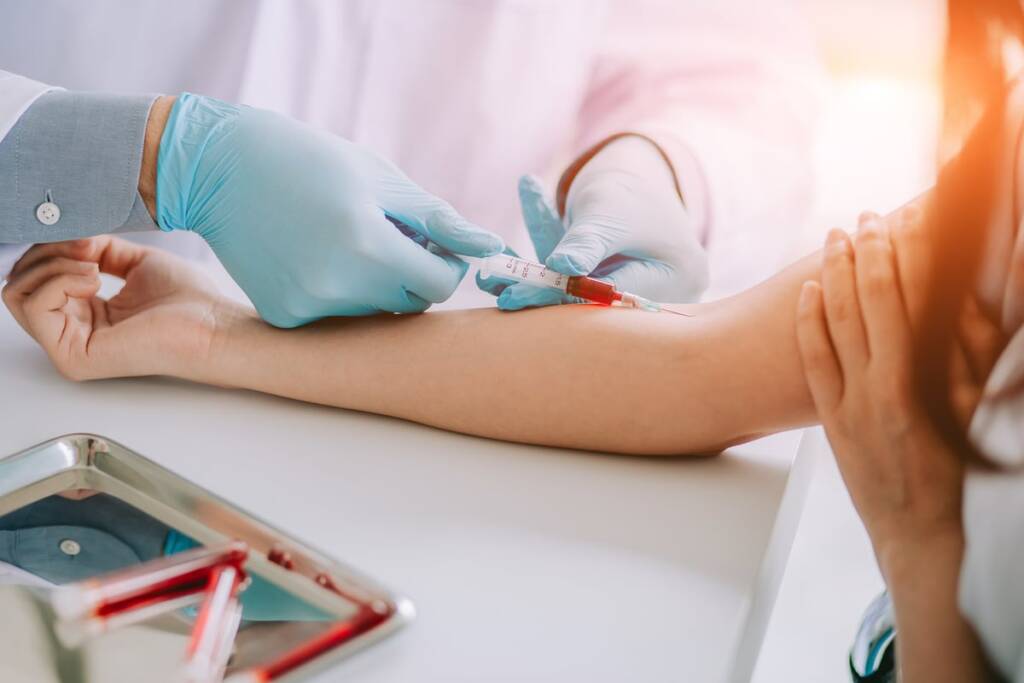
8 weeks | Self-paced | Externship guarantee
Online Phlebotomy Technician Certification
Patient Care Technician (PCT)
PCE Classification: Direct Patient Care (hospital-based)
Patient Care Technicians work in hospital and acute care settings with the highest acuity patient populations — and carry some of the highest clinical value for PA school applications.
Clinical duties:
- Vital sign monitoring in inpatient settings
- EKG and phlebotomy (PCT roles often include both)
- Assisting with patient procedures and clinical tasks
- Wound care, catheter assistance, and mobility support
- Direct collaboration with RNs and physicians/PAs
- Trauma, cardiac arrest, and acute care exposure

8 weeks | Self-paced | Externship guarantee
Online patient Care Technician Certification
AAPA’s guide describes PCTs as:
“A very versatile position! As a PCT, you’re typically able to take vital signs, help assist nurses in the care of patients, apply splints to fractures, help in traumas and cardiac arrests — and that’s only the beginning!”
The MA + Phlebotomy + EKG Stack: Why It’s the Gold Standard
PCE Classification: Direct Patient Care
Stacking certifications isn’t just smart — it’s strategic. Here’s why combining Medical Assistant (CCMA), Phlebotomy (CPT), and EKG (CET) creates the most powerful pre-health foundation:
- More job options — You qualify for clinical roles in hospitals, urgent care, cardiology, primary care, and labs simultaneously
- Higher hiring priority — Employers consistently prefer candidates with multiple verified credentials
- Broader PCE exposure — Each role gives you different patient populations, skills, and clinical settings
- Faster hour accumulation — Certified candidates are placed faster and in more clinical environments
- Application gold — Admissions committees recognize these certifications as indicators of real, demonstrated clinical competency
Step 4: Get Certified Through an NHA-Recognized Program
The National Healthcareer Association (NHA) is one of the most respected credentialing bodies in U.S. healthcare. Their certifications are NCCA-accredited — the gold standard in healthcare credential validation.
According to Advanced eClinical Training’s NHA certification guide, the NHA offers eight nationally recognized certifications, including:
- ✅ Certified Clinical Medical Assistant (CCMA) — Core clinical foundation
- ✅ Certified Phlebotomy Technician (CPT) — Blood draws, specimen collection, lab protocol
- ✅ Certified EKG Technician (CET) — Cardiac monitoring, rhythm interpretation
- ✅ Certified Patient Care Technician/Assistant (CPCT/A)
- ✅ Certified Medical Administrative Assistant (CMAA)
- ✅ Certified Electronic Health Records Specialist (CEHRS)
- ✅ Certified Pharmacy Technician (CPhT)
- ✅ Certified Billing and Coding Specialist (CBCS)
“An NHA certification is highly respected and nationally recognized, which means it can open many doors for you. Your certification can help you obtain a job in any state in the country or in any type of facility where your position exists.” — Advanced eClinical Training
Step 5: Enroll in Advanced eClinical Training — The Fastest Path to Verified Clinical Hours
One of the most common inefficiencies among pre-health graduates is attempting to enter clinical roles without structured preparation.
This often results in:
- Delayed employment
- Limited role access
- Inconsistent documentation of experience
Programs such as Advanced eClinical Training (ACT) are designed to address these gaps through:
- Accelerated certification pathways (8–12 weeks)
- Clinical externship placement through a national network
- Verified documentation of clinical hours
- Career coaching and employer alignment
ACT reports:
- 97% certification pass rate
- 95% job placement within two months
- 10,000+ graduates nationwide
These outcomes reflect a structured pathway from training to employment, reducing the time required to build competitive experience.
Advanced eClinical Training (ACT) is purpose-built for pre-PA and pre-med students who need to build real, verifiable clinical experience efficiently after graduation.
Pre-PA Clinical Hours Program
Build verifiable PCE hours that PA schools actually value. Get structured clinical training, real patient interaction, and application coaching.
- ✅ Direct patient care experience (PCE-qualifying)
- ✅ PCE & HCE documentation (formatted for CASPA)
- ✅ Pre-PA application strategy coaching
- ✅ MA + Phlebotomy + EKG certification stack
Pre-Med Clinical Experience Program
Go beyond shadowing. Build real clinical experience that strengthens your personal statement, AMCAS application, and interview stories.
- ✅ Real patient interaction (not just observation)
- ✅ Med school narrative coaching (personal statement + interview stories)
- ✅ NHA-aligned certification
- ✅ Optional PCT & Phlebotomy Stackable Certifications
Stack Certifications Strategically
A single certification is sufficient to begin. However, a stacked credential approach significantly increases both employability and application strength.
The combination of:
- Certified Clinical Medical Assistant (CCMA)
- Certified Phlebotomy Technician (CPT)
- Certified EKG Technician (CET)
creates a multi-dimensional clinical profile that:
- Expands job eligibility across healthcare settings
- Accelerates hiring timelines
- Provides broader patient care exposure
- Strengthens narrative depth in applications
Step 6: Get a Mentor — The Competitive Edge Most Students Ignore
With to-dos like choosing the right courses, securing internships, and narrowing down potential specializations, the path toward a career in healthcare isn’t always straightforward. For pre-health students, having a mentor to provide guidance along the way can be the secret to staying on track.
Here’s the truth about PA and medical school admissions that raw hours and certifications alone won’t reveal: the students who get accepted aren’t just the ones with the most hours — they’re the ones who know how to use their experience to tell a compelling story, document it correctly, choose the right schools, nail the interview, and avoid the costly mistakes that quietly disqualify otherwise qualified applicants.
Strategic One-on-One Mentorship Contributes to:
- Improved application success
- Stronger academic and professional performance
- Enhanced career clarity and decision-making
Effective mentorship provides:
- Application strategy and timeline planning
- Personal statement development
- Interview preparation
- School selection guidance
- Error avoidance in documentation and positioning
Advanced eClinical Training’s Expert Pre-Health Mentorship Programs
Advanced eClinical Training’s mentorship programs are designed specifically for pre-health students who are serious about getting where they want to go — without wasting years on costly mistakes, wrong turns, and trial-and-error. ACT’s Pre-health mentorship programs are an invaluable resource, offering the advice, support, and expertise needed to kickstart your career in healthcare.
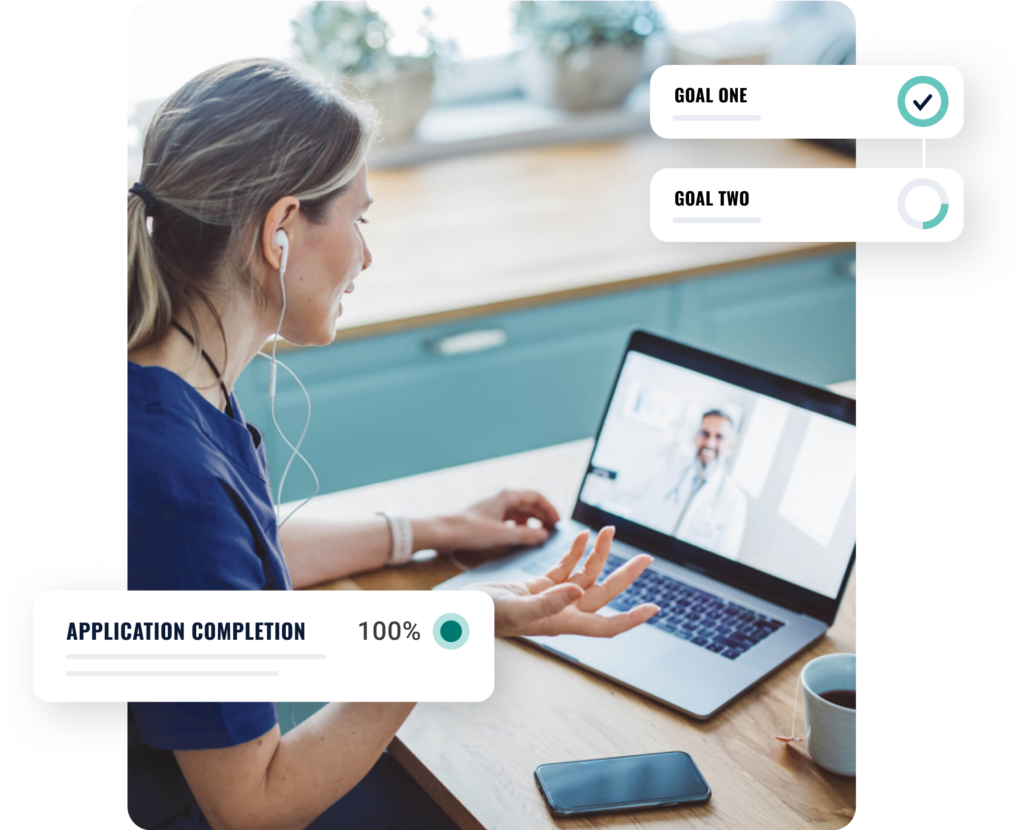
- 12 months of unlimited access to our mentorship portal
- 8 virtual guidance sessions with your mentor
- A customized mentorship plan
- An advising flow chart created by your mentor
- Application prep, guidance, and advice
- Resume / CV review
- Assistance with personal statement writing and review
- Interview prep
- Letter of reference written by your PA-C mentor for your graduate school application
About ACT Mentors
Our personalized student mentorship programs pair aspiring medical professionals with experts who work in your desired field. These advisors been through the application, testing, and admissions processes. They’ve successfully completed post-graduate medical training programs and are working professionals who excel in your field of choice. In short, they’ve been where you are, and they know what it takes to get you through to the other side.
From strategic application guidance to fostering long-term professional growth, our Advanced eClinical Training’s mentorship programs empower you to confidently work toward the medical career you’ve dreamed of.
Personalized Mentorship for Strong Graduate School Applications
Once enrolled in one of our medical mentorship programs, you will be matched with a mentor whose strengths best meet your needs. With three different levels of mentorship available, you can choose exactly how much individualized communication with and guidance from your mentor you receive throughout the year-long program.
In addition to your advisor, you will also have access to our mentorship program portal, which includes field-specific resources, webinars, events, shadowing opportunities, and application tips.
Your mentor can also help you to draft and edit a personal statement and write you a letter of reference.


Here’s what you can expect in your mentorship program
Holistic Pre-Med/PA & Medical/PA School Guidance
Helps students stand out by integrating clinical excellence with whole-person care perspectives
Medical/ PA School Admissions Insight
Firsthand experience interviewing applicants and advising on how to build a compelling application
Academic & Clinical Innovation
Guides students interested in research, curriculum development, and building unique career paths
Pre-Med/ Pre-PA to Leadership Pathway
Offers a rare perspective on how to evolve from clinical training into high-impact leadership roles
Strategic Career Positioning
Helps students think beyond medical school toward long-term career trajectory and specialization
Research & Academic Excellence
Strong guidance for publications, academic involvement, and competitive positioning
Healthcare Systems & Innovation Exposure
Ideal mentor for students interested in policy, innovation, or non-traditional medical careers
High-Level Decision-Making Insight
Prepares mentees to think like future leaders in medicine and healthcare
Pre-Physician Assistant Mentorship Program (PAMP)
Designed for serious PA school applicants who want expert guidance at every stage.
What your PA mentor provides:
- Personalized roadmap — Built from a detailed questionnaire on your background, goals, and needs
- Weekly goal-setting — Stay focused, on-track, and accountable to real application deadlines
- CASPA application strategy — Correctly categorize and maximize your PCE and HCE hours
- School selection guidance — Identify the programs where you’re competitive
- Personal statement drafting and editing — Craft a narrative that stands out to admissions committees
- Interview preparation — Mock interviews, response coaching, and feedback
- Resume review — Position your clinical experience to its maximum potential
- Letter of recommendation — Your mentor can write you a professional reference
- PCE & clinical experience guidance — Strategic advice on which roles, settings, and hours best serve your application
- Rejection analysis and feedback — If you’re reapplying, understand exactly what to address
- Prerequisite coursework planning — Ensure your academic record is optimized for PA admissions
Meet Our Pre-Physician Assistant Mentors

Sarah is a physician assistant practicing in Neurosurgery for the last 4 years. She earned her Master of Physician Assistant Studies from Indiana University, Indianapolis, after completing her B.S. in Neuroscience with a minor in medical sciences at Indiana University Bloomington. Her patient care experience included roles as a CNA, Physical Therapy Technician, and surgical Patient Care Technician.
Post-graduation, she completed a Physician Assistant Fellowship in Neurosurgery at Mayo Clinic, Phoenix, AZ. A first-generation college graduate, Sarah overcame numerous challenges to become a PA without a director mentor so now her passion is to help those around her succeed through shadowing, precepting, and providing guidance to pre-Health students.

Lee Phan is a graduate of Barry University in Miami Shores, FL, where she earned her Master of Clinical Medical Sciences and Physician Assistant degree. She attended the University of Colorado Boulder prior to PA school, where she received her B.A. in Integrative Physiology with a minor in Business Analytics. Upon discovering her interest in the field of medicine, she worked in multiple roles within healthcare as a pharmacy technician, phlebotomist, medical scribe, and medical assistant. As a first-generation Vietnamese American with no prior close connections to PA, Lee was faced with several common obstacles when applying to PA school, including the lack of resources available, difficulty in finding a reliable mentor who fully understood the process, and the financial hardships that limited her ability to apply to many schools. Through trial and error, she has paved her own unique path to becoming a PA and is now inspired to provide the resources that she wishes were available during her pre-health journey. In addition to pursuing her passion for medicine, she hopes to help other students gain the confidence they need to become strong candidates and focus their attention on what really matters within the application process.
Learn More About the Pre-PA Mentorship Program →
Pre-Med Mentorship Program
Designed for pre-med students preparing for medical school applications who need more than just a checklist — they need a guide.
What your Pre-Med mentor provides:
- Application strategy coaching — Customized AMCAS/AACOMAS planning and timeline management
- Personal statement coaching — Build the narrative arc that makes your application unforgettable
- MCAT preparation planning — Study strategy, timeline, and resource guidance
- Clinical experience narrative coaching — Learn to articulate your patient care stories powerfully in essays and interviews
- Interview preparation — Mock interviews modeled on real MMI and traditional formats
- Specialty exploration — Honest, informed perspective on what it’s actually like to practice in different fields
- Weekly accountability goals — Keep you moving forward consistently toward your deadline
Learn More About the Pre-Med Mentorship Program →
Step by step overview
How the Mentorship Process Works
Step 1— Complete a detailed questionnaire
Your mentor gets a clear, complete picture of your experience, academic background, goals, strengths, and areas for growth.
Step 2 — Receive a customized mentorship plan
Your mentor builds a program designed specifically for you — not a generic template, a personalized roadmap.
Step 3 — Meet via Zoom
Review your plan together, refine it based on your input, and begin your first week with clarity and direction.
Step 4 — Weekly sessions + ongoing support
Weekly goal-setting, application progress reviews, essay feedback, interview coaching, and consistent accountability — for the full duration of your program.
Step 5 — Access the mentorship portal
Field-specific resources, webinars, events, shadowing opportunities, and application tips — all in one place, available whenever you need them.
Choose Your Mentorship Level
Three levels of mentorship are available, so you can select exactly how much individualized communication and guidance fits your needs and application stage. Every level includes access to the mentorship program portal with field-specific resources, webinars, events, shadowing opportunities, and application tips.
“Unlike college admissions consultants, who could have any kind of educational background, our mentors are experts and specialists in your desired field. Their insight and knowledge uniquely prepare you for the admissions and interview process and give you a leg up over other applicants.” — Advanced eClinical Training
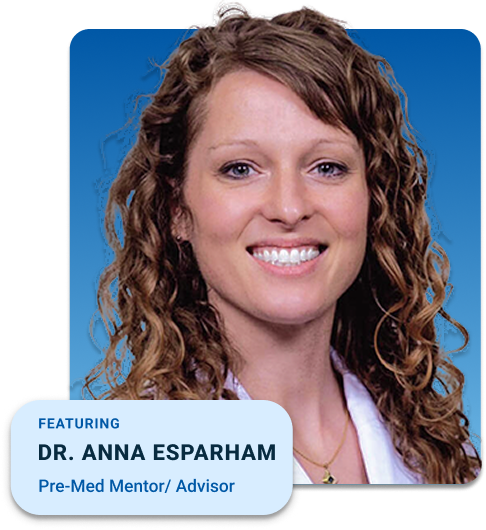
Dr. Anna Esparham
With a strong foundation in academic medicine, Dr. Esparham has mentored medical students, residents, and fellows throughout their training journeys, and has played an active role in evaluating applicants at the University of Kansas School of Medicine. She is also a curriculum designer and clinical innovator, having developed forward-thinking academic programs and care models that bridge traditional and integrative medicine.
KEY STRENGTHS
✓ Personal Statement Drafting & Editing
✓ Medical School Application Strategy
✓ Interview Prep & Admissions Insight
✓ Reapplication & Rejection Feedback
✓ Clinical Experience & Volunteer Positioning
✓ Holistic & Integrative Medicine Perspective
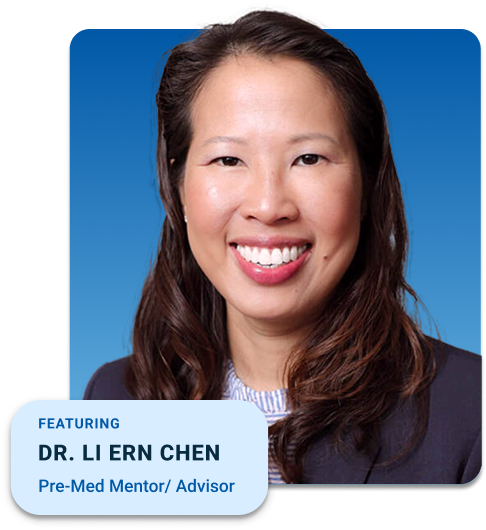
Dr. Li Ern Chen
Is a physician executive and surgeon with over 20 years of experience spanning clinical medicine, health system leadership, and healthcare innovation. She earned her MD from Washington University School of Medicine and holds a Master’s in Clinical Science from UT Southwestern, with board certifications in both general and pediatric surgery.
Dr. Chen is also deeply committed to mentorship with years of expert experience guiding students and professionals across all stages of their careers.
KEY STRENGTHS
✓ Strategic Pre-Med Career Planning
✓ Leadership & High-Impact Medical Careers
✓ Research, Publications & Academic Positioning
✓ Healthcare Systems & Innovation Exposure
✓ Personal Branding for Competitive Applicants
✓ Long-Term Career & Specialty Navigation
Step 8: Document Clinical Experience Precisely
For application platforms such as:
- CASPA
- AMCAS
accurate documentation is essential.
Applicants must provide:
- Detailed role descriptions
- Supervisor verification
- Weekly hours and duration
- Institutional information
Best practices include:
- Logging hours in real time
- Maintaining supervisor contact records
- Keeping a structured clinical journal
- Separating PCE and HCE clearly
For PA School Applicants (CASPA):
💡 Pro tip: When filling out the CASPA application, you must provide your job title, role, name of the institution, supervisor’s name and title, a detailed description of your tasks, the number of hours worked per week, and the total number of weeks worked.
Documentation Best Practices:
- Log hours in real-time — don’t wait until application season
- Save pay stubs, employment letters, and supervisor contacts
- Separate PCE from HCE carefully — wrong categorization costs you thousands of hours
- Have supervisors verify hours in writing, early
- Keep a detailed clinical journal with dates, facility names, duties, and patient interactions
For Medical School Applicants (AMCAS):
- Document under “Work and Activities” with specific duty descriptions
- Reflect on what you learned — admissions committees want context, not just titles
- Keep a clinical journal with memorable patient cases and moments of insight for personal statement content
💡 Pro tip: Your ACT mentor will walk you through exactly how to document and categorize your hours for maximum impact on your specific target programs — one of the most overlooked and most consequential parts of the application.
Step 9: Build a Compelling Application Narrative
Admissions committees assess more than metrics.
They evaluate:
- Clinical insight
- Professional maturity
- Reflection on patient care experiences
- Alignment with the chosen profession
Strong applicants demonstrate the ability to translate clinical exposure into clear, meaningful narratives that reflect readiness for advanced training.
Step 10: Integrate Shadowing and Professional Relationships
Shadowing remains a distinct requirement for both PA and medical school applicants. Most PA programs recommend or require 40–100+ hours of PA shadowing, according to Medical Aid. For medical school, shadowing a physician in your area of interest is expected and weighed significantly.
Recommended benchmarks:
- 40–100+ hours for PA applicants
- Consistent physician shadowing for medical school applicants
Clinical roles provide direct access to:
- Physicians and physician assistants
- Mentorship opportunities
- Letters of recommendation
Step 11: Apply Strategically and Early
Application timing is a critical factor.
- CASPA operates on a rolling admissions basis
- AMCAS submissions are strongest when completed early in the cycle
Early applicants benefit from:
- Greater interview availability
- Increased program capacity
- Stronger overall positioning
For PA School (CASPA):
CASPA represents 95% of accredited PA programs and opens its annual cycle on the last Thursday of April. Applications are reviewed on a rolling basis — submitting early dramatically increases your chance of an interview.
CASPA Application Checklist:
- Official transcripts (all institutions attended)
- GRE or PA-CAT scores (program-specific)
- 3–5 letters of recommendation (including at least one practicing PA)
- Personal statement (mentor-coached and multiple-draft reviewed)
- PCE and HCE documentation (verified, correctly categorized, maximized)
- PA shadowing hours (listed separately)
- Supplemental applications (most top programs require additional essays)
Pro Tips for CASPA Documentation:
- ✅ Log your hours in real-time — don’t wait until you apply
- ✅ Save all pay stubs, letters of employment, and supervisor contacts
- ✅ Separate PCE from HCE carefully — placing them in the wrong category can cost you thousands of hours
- ✅ Have supervisors verify your hours in writing early
- ✅ Use a spreadsheet with dates, facility names, and duties performed
For Medical School (AMCAS):
- AMCAS opens in May and begins accepting submissions in June
- Early submission is strongly advantageous — schools begin secondary invitations immediately after verification
- Secondary applications require additional essays; prepare response drafts in advance with your mentor’s guidance
- Document hours under “Work and Activities”
- Describe your specific duties — not just the job title
- Reflect on what you learned and how it shaped your decision to pursue medicine
- Keep a clinical journal with specific patient cases and learning moments for personal statement fuel
Why ACT Graduates Stand Out — By the Numbers
| ACT Outcome | Result |
|---|---|
| CCMA Pass Rate | 97% |
| Job Placement Within 2 Months | 95% |
| Successful Graduates | 10,000+ |
| Clinical Partners Nationwide | 1,000+ |
What sets ACT apart for pre-health students:
- NHA-aligned certifications recognized by employers nationwide
- Accelerated 8–12 week programs — flexible enough to work around your schedule
- Externship placement through 1,000+ real clinical partners
- Expert mentorship by working professionals in your target field
- Immersive digital learning — interactive simulations, virtual labs, 3D models, and up-to-date curriculum
- Stackable credentials — CCMA → CPT → CET, each building on the last
- Lifetime career services access — available even years after graduation
Your Complete 90-Day to 12-Month Action Plan
| Timeline | Action |
|---|---|
| Week 1–2 | Research target PA/med school requirements. Create CASPA or AMCAS account. |
| Week 2–4 | Enroll in Advanced eClinical Training. Enroll in the Pre-PA or Pre-Med Mentorship Program. |
| Month 1 | Begin CCMA certification prep. Complete detailed mentorship questionnaire. Review your personalized plan on first Zoom call. |
| Month 2 | Complete medical assistant training. Begin externship placement. Start clinical journal. |
| Month 2–3 | Add Phlebotomy (CPT) certification to your stack. Begin accumulating verified PCE hours in clinical role. |
| Month 3 | Add EKG (CET) certification. Certification stack complete. |
| Month 3–6 | Accumulate hours. Weekly mentor sessions — school selection, essay planning, application strategy. |
| Month 4–6 | Arrange PA or physician shadowing through clinical network. Obtain supervisor verification letters. |
| Month 6–9 | Draft personal statement with mentor coaching. Begin CASPA/AMCAS activity section drafts. |
| Month 9–12 | Finalize application with mentor review. Submit early in the application cycle. Begin interview prep. |
Final Thoughts: You’re Not Behind. You Just Need the Right Team.
No clinical hours after graduation is a starting point, not a disqualification. The difference between students who get accepted to competitive PA and medical programs and those who don’t isn’t intelligence or even raw hours — it’s strategy, preparation, and the quality of support around them.
The path is clear:
- Understand what counts (PCE, not just HCE)
- Know your target hours for each specific program
- Get certified through an NHA-aligned, structured program
- Stack credentials for maximum clinical placement and application power
- Partner with an expert mentor who has navigated this exact path successfully
- Document everything precisely for CASPA or AMCAS
- Build your narrative through real, mentored patient interaction
- Apply early and strategically
🩺 Enroll in Pre-PA Clinical Hours Training →
🔬 Explore Pre-Med Clinical Experience Programs →
📋 View All Certification Stack Options →
Advanced eClinical Training gives you the certifications, the clinical hours, the documentation, the mentorship, and the application coaching to make every single step count.
Learn From Expert MD, PA, DNP & RN Instructors
Learn from experienced physicians, physician assistants, advanced practice nurses, and registered nurses who bring clinical expertise and real-world healthcare experience into your training.
ACT instructors provide personalized support to help you master clinical concepts, prepare for CCMA certification, and build confidence for real patient care.
- One-on-One Instructor Support
- Live Virtual Office Hours
- Interactive Clinical Case Discussions
- CCMA Certification Exam Preparation
- Personalized Feedback & Academic Guidance
- Clinical Skills & Externship Readiness
- Pre-Health Mentorship with MD & PA Advisors
FREQUENTLY ASKED QUESTIONS (FAQ)
PA School Clinical Hour Benchmarks
Most PA programs require:
Minimum: 500–2,000 hours
Competitive: 3,000–4,000+ hours
Data from the Physician Assistant Education Association shows accepted applicants average over 3,000 hours of PCE.
Medical School Clinical Experience Benchmarks
Medical schools do not enforce strict hour requirements but expect:
200–500+ hours of clinical exposure
Consistent involvement over time
Direct or meaningful patient interaction
The emphasis is on quality, reflection, and continuity, not just volume
PCE involves direct patient interaction and clinical responsibility, while healthcare experience (HCE) includes roles where you are present in a healthcare setting but not directly responsible for patient care. Admissions committees for PA programs prioritize PCE significantly more than HCE. Understanding this distinction is critical, and mentorship programs within Advanced eClinical Training help students categorize their experience correctly.
PCE Examples:
Taking vital signs
Assisting procedures
Performing clinical tasks
Interacting directly with patients
Common PCE roles:
Medical Assistant
Phlebotomy Technician
EMT
Patient Care Technician
HCE Examples:
Medical scribing
Administrative roles
Front desk positions
The American Association of Physician Associates emphasizes that PCE is significantly more valuable for PA school admissions.
No. Shadowing is an important component of your application, but it is not sufficient on its own. Medical schools and PA programs expect applicants to have hands-on clinical experience in addition to shadowing. Shadowing provides observation, while clinical roles provide direct patient interaction. A structured approach, such as combining clinical work and shadowing through Advanced eClinical Training, ensures a more competitive profile.
Yes, it is possible to get into PA school without any patient care experience, but it is highly competitive. The vast majority of PA school applicants who lack clinical experience are not accepted.
The national average of clinical hours for admitted students is 2,500–4,000 hours. Without meaningful hours, your application will be filtered out by most programs before it’s ever read.
The only strategic path with minimal hours: pair an extraordinary GPA (3.8+), outstanding GRE scores, and exceptional personal statement with an aggressive school list targeting programs with no stated minimum — and work with a mentor who can help you make the strongest possible case for your profile.
Medical Assistant (CCMA) — Broad clinical exposure across multiple clinical tasks
Phlebotomy Technician (CPT) — Direct patient contact, widely recognized by programs
Emergency Medical Technician (EMT) — High responsibility, versatile across settings
Patient Care Technician (PCT) — Hospital-based, deeply hands-on
CNA (Certified Nursing Assistant) — Very common among accepted applicants
EKG Technician (CET) — Specialized, opens cardiology/urgent care doors
Emergency Room Technician — High-acuity, high-value experience
The most effective way to gain clinical hours with no prior experience is to obtain a certification in a patient-facing role, such as medical assistant, phlebotomy technician, or EKG technician. These certifications qualify you for entry-level clinical jobs where you can begin accumulating hours immediately. Programs like Advanced eClinical Training streamline this process by combining certification, clinical training, and job placement support.
The fastest path is through a structured program that provides certification and direct entry into clinical roles. Most students can begin working in a clinical setting within 8–12 weeks after completing certification. Advanced eClinical Training offers accelerated pathways designed to reduce delays and help students start accumulating clinical hours quickly.
Yes. Most clinical roles that provide PCE are paid positions, allowing students to earn income while building their experience. Roles such as medical assistant or phlebotomy technician are commonly full-time or part-time jobs. Advanced eClinical Training supports students in transitioning into these roles quickly so they can begin earning and gaining experience simultaneously.
Applicants must track total hours, responsibilities, and supervisor details. For PA school applications, hours must be categorized correctly as PCE or HCE and submitted through application platforms. Medical school applications require detailed descriptions and reflections on experiences. Advanced eClinical Training provides guidance on how to document clinical hours accurately for maximum impact.
Yes. Clinical experience is one of the most important factors in admissions decisions for both PA and medical school. It demonstrates readiness, commitment, and understanding of the healthcare field. Applicants with strong, well-documented clinical experience are significantly more competitive. Structured training and mentorship through Advanced eClinical Training help ensure that students build meaningful and properly documented experience.
While not required, mentorship provides a significant advantage. Mentors help with application strategy, personal statements, interview preparation, and school selection. Students with mentorship are more likely to avoid critical mistakes and present stronger applications. Advanced eClinical Training offers mentorship programs specifically designed for pre-health students navigating this process.
You can figure it out alone. But research confirms that students who try to do so have significantly worse outcomes than those with structured mentorship — and the stakes here are too high for unnecessary trial and error.
Students without mentorship have comparatively reported worse overall well-being, poorer application success, decreased career support and reduced research productivity.
The specific value of mentorship includes:
1, Avoiding costly mistakes — wrong school lists, mis-categorized hours, weak personal statements, missed deadlines
2. Personalized strategy — advice calibrated to your GPA, your hours, your career goal
3. Interview preparation — practicing out loud with someone who’s been on the other side of the table
4. Accountability — weekly goals that actually keep you moving forward
5. Real insight — honest perspective on what PA school or medical school is actually like from someone living it
Explore Mentorship Levels and Enroll →
Yes. With a structured plan that includes certification, clinical employment, and consistent hour accumulation, it is possible to build a competitive application within 6–12 months. The key is starting early and following a clear strategy. Advanced eClinical Training provides a direct pathway designed to help students achieve this timeline efficiently.
Non-traditional applicants often most benefit from mentorship — precisely because their path doesn’t follow the standard playbook and they need someone who can translate unconventional experience into a compelling application narrative.
Non-traditional pre-health students commonly face:
– Explaining career changes in personal statements without undermining their credibility
– Correctly categorizing non-medical work experience on CASPA
– Addressing GPA from degrees earned years ago
– Building a clinical experience plan that works around existing career and family commitments
– Understanding how their life experience is actually a strength in the admissions process
Your ACT mentor will assess your entire background holistically and help you position every aspect of your non-traditional path as an asset, not a liability.
ACT offers three levels of mentorship, each designed to give you the right amount of individualized guidance for your specific situation and application timeline:
Level 1 — Foundational guidance, portal access, periodic check-ins: ideal for students who are early in their journey and primarily need strategic direction and resource access
Level 2 — Regular sessions, full application review, personal statement coaching, and interview prep: ideal for students 6–12 months from their application cycle
Level 3 — Maximum individualized contact, deep-dive essay and interview coaching, school list optimization, and comprehensive accountability: ideal for students in their active application cycle or reapplying after a rejection
All levels include access to the mentorship portal with field-specific resources, webinars, events, shadowing opportunities, and application tips. All mentors can write letters of recommendation.
Explore Mentorship Levels and Enroll →
Yes — the NHA is one of the most recognized credentialing bodies in U.S. healthcare, and its certifications carry genuine professional weight.
NCCA accreditation (National Commission for Certifying Agencies) is the gold standard for healthcare certification validation in the United States — the same accreditation standard held by major nursing and medical certifying bodies.
For PA school applications, NHA certification signals to admissions committees:
– You have completed formal, structured clinical training
– You passed a nationally standardized competency exam
– You are prepared to function in a real clinical setting
For employers, NHA certification directly increases hiring priority, placement speed, and starting salary potential.
The CCMA exam is challenging — but with the right preparation, it’s very passable. ACT students achieve a 97% pass rate.
From Advanced eClinical Training’s CCMA exam guide:
Scoring range: 200–500 (perfect score = 500)
Passing score: 390 or higher
Time limit: 3 hours
Format: Multiple choice, competency-based questions across 13 content domains
ACT’s preparation includes 1,400 scored practice questions, 700 self-evaluation assessments, and instructor support from subject matter experts who know exactly what the exam tests — which is why ACT’s pass rate significantly exceeds the national average.