What Healthcare Jobs Can You Start Without a College Degree?
You don’t need a two- or four-year degree to start working in healthcare. Several healthcare jobs without a degree have entry paths that involve short-term training, certification, or on-the-job experience instead.
So, which healthcare careers can you start without spending years in college? In this guide, we’ll look at the training requirements, pay, and job outlook for several options to help you compare your choices.
Can You Work in Healthcare Without a College Degree?
Yes. There are healthcare jobs that do not typically require an associate or bachelor’s degree. However, that does not always mean you can start working without any education or training. Depending on the role, you may need job-specific training, a certificate, professional certification, or experience gained on the job.
The path into healthcare looks different depending on the job. Some employers train workers after they are hired, while other roles typically require formal training or may require certification.
Not every healthcare career follows all four steps. The education and credential requirements depend on the occupation, employer, and state.
The U.S. Bureau of Labor Statistics projects about 1.9 million openings per year, on average, across healthcare occupations from 2025 to 2035.
Which Healthcare Jobs Don’t Require a College Degree?
Several healthcare careers have entry paths that do not typically require an associate or bachelor’s degree. The amount of training varies, though. Some jobs commonly require a certificate program, while others may offer on-the-job training or have state-specific requirements.
| Career | Typical Entry-Level Education | 2025 Median Pay | 2025–35 Growth |
|---|---|---|---|
| Medical Assistant | Postsecondary nondegree award* | $45,690 | 13% |
| Pharmacy Technician | High school diploma or equivalent | $45,750 | 6% |
| Phlebotomist | Postsecondary nondegree award | $45,230 | 7% |
| Home Health & Personal Care Aide | High school diploma or equivalent* | $35,800 | 18% |
| Physical Therapist Aide | High school diploma or equivalent | $35,240 | 4% |
*BLS lists the typical entry-level education for each occupation. Requirements can vary by employer, state, and position. Some medical assistants enter the occupation with a high school diploma and on-the-job training, while some home health and personal care aide positions do not require a formal educational credential.
Medical Assistant
Medical assistants handle a mix of clinical and administrative work in settings such as physician offices, hospitals, and outpatient clinics. Their responsibilities may include taking vital signs, preparing patients for exams, scheduling appointments, and recording patient information.
BLS lists a postsecondary nondegree award as the typical entry-level education. Many medical assistants complete a certificate program, although some enter with a high school diploma and learn through on-the-job training.
If this type of work interests you, explore ACT’s Medical Assistant program .
View Medical Assistant data from BLSPharmacy Technician
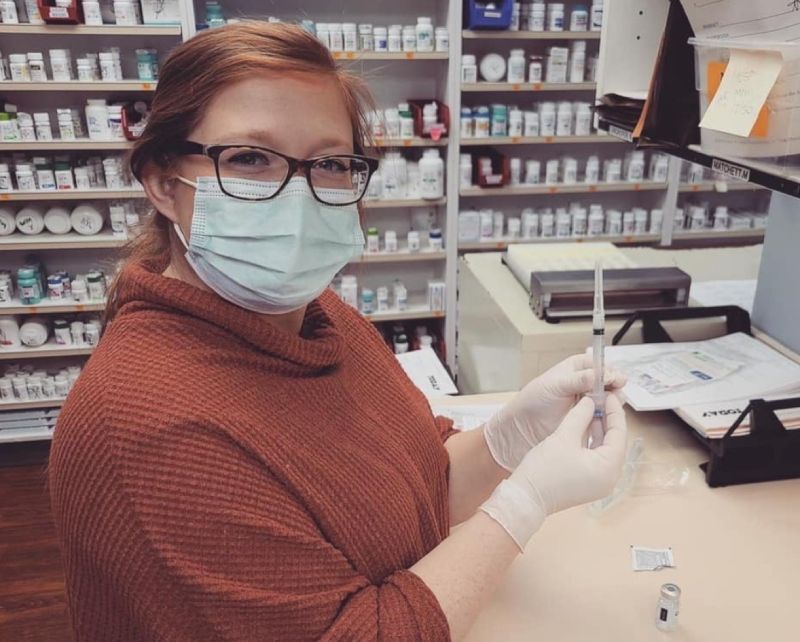
Pharmacy technicians work with pharmacists to help prepare and dispense prescription medications. Depending on the setting, they may also process prescription information, manage inventory, interact with patients or customers, and handle other pharmacy operations.
BLS lists a high school diploma or equivalent as the typical entry-level education. Pharmacy technicians may learn on the job or complete a pharmacy technology program. Most states regulate pharmacy technicians, so requirements may include formal training, an exam, registration, or other steps.
ACT’s Pharmacy Technician program provides online training and preparation for applicable national certification exams.
View Pharmacy Technician data from BLSPhlebotomist
Phlebotomists draw blood for testing, transfusions, research, and blood donations. The job also involves identifying patients correctly, labeling specimens, following safety procedures, and helping patients feel comfortable during blood collection.
Phlebotomists typically enter the occupation after completing a postsecondary phlebotomy program, although BLS notes that some qualify with a high school diploma and on-the-job training. Employers may also prefer candidates who have earned professional certification.
Learn more about ACT’s Phlebotomy Technician program .
View Phlebotomist data from BLSHome Health and Personal Care Aide
Home health and personal care aides help people with daily living activities and may monitor a client’s condition or provide basic health-related assistance, depending on the position. They commonly work in clients’ homes and other community-based settings.
BLS lists a high school diploma or equivalent as the typical entry-level education, although some positions do not require it. Aides working for certified home health or hospice agencies may need formal training or may be required to pass a standardized test.
View Home Health and Personal Care Aide data from BLSPhysical Therapist Aide
Physical therapist aides work under the direction and supervision of physical therapists. Their duties may include preparing treatment areas, cleaning equipment, helping move patients, and completing clerical tasks.
It’s important not to confuse a physical therapist aide with a physical therapist assistant. They are different occupations with different education requirements and responsibilities.
BLS projects employment of physical therapist aides to grow 4% from 2025 to 2035.
How Do You Choose a Healthcare Career Without a Degree?
Start by thinking about the kind of work you want to do. Then compare the training, requirements, pay, and job outlook for the roles that interest you. You don’t need to choose a training program before you know which career you’re working toward.
What Kind of Work Interests You?
Choose an area below to see which healthcare roles may be worth exploring.
Medical assisting, patient care, phlebotomy, and other clinical support roles may be worth exploring if you want regular interaction with patients.
Look into phlebotomy if you’re interested in blood collection, specimen handling, patient identification, and working directly with patients during blood draws.
Pharmacy technician roles may be a good area to research if you’re interested in prescriptions, medications, pharmacy operations, and working with pharmacists.
Medical assisting combines clinical responsibilities with administrative tasks, making it worth considering if you don’t want your work limited to one side of a practice.
Physical therapy support roles may be worth exploring. Pay close attention to the job title, though: physical therapist aides and physical therapist assistants have different education and credential requirements.
Check the Entry Requirements
Once you have a few careers in mind, find out what you actually need to enter each occupation.
Look at What You’ll Actually Do
Job titles only tell you so much. Read about the day-to-day responsibilities and think about whether you would be comfortable doing that work regularly. Consider patient interaction, physical demands, administrative tasks, work environment, and schedule.
Compare Pay and Job Outlook
Look at the salary, projected growth, and annual openings for the careers you’re considering. The figures above can help you compare your options without assuming that the fastest-growing job or highest salary is automatically the best fit for you.
Check Jobs Where You Want to Work
Search current job postings in your area and pay attention to the qualifications that appear repeatedly. This can give you a better idea of what local employers expect before you commit to a training program.
Start with the healthcare job that interests you, then figure out what training you need—not the other way around.
Prepare for a Healthcare Career With Advanced eClinical Training
Once you’ve found a healthcare career that interests you, you can start comparing the training and qualifications you’ll need to pursue it. Advanced eClinical Training offers online allied health programs designed to help students build healthcare skills and prepare for applicable certification exams.
Explore ACT Healthcare Training Programs
ACT’s Physical Therapy Technician program does not qualify students to become licensed physical therapists or physical therapist assistants. Those occupations have separate education and licensing requirements.
ACT by the Numbers
Program availability, certification eligibility, and outcomes may vary by program and student.
You don’t need to complete every program. The right training depends on the healthcare career you’re interested in and the qualifications that role requires. Check employer and state requirements before deciding which program fits your next step.
Find a Healthcare Training Program That Fits Your Goals
Compare ACT’s online allied health programs and see which training options match the healthcare work you’re interested in.
Explore Allied Health Certification Programs →FAQs About Healthcare Jobs Without a Degree
Healthcare jobs that don’t typically require an associate or bachelor’s degree include medical assistant, pharmacy technician, phlebotomist, home health or personal care aide, and physical therapist aide. Training and certification requirements vary by occupation, employer, and state.
Yes. Hospitals employ people in some roles that don’t typically require a college degree. Depending on the position, you may still need job-specific training, certification, previous experience, or other qualifications.
Yes. A college degree is not typically required to become a medical assistant. The Bureau of Labor Statistics lists a postsecondary nondegree award, such as a certificate, as the typical entry-level education, although some medical assistants enter with a high school diploma and learn on the job.
No. Phlebotomists typically don’t need a college degree. BLS lists a postsecondary nondegree award as the typical entry-level education, and certification may be required or preferred depending on the employer or state.
A college degree is not typically required. BLS lists a high school diploma or equivalent as the typical entry-level education for pharmacy technicians. However, requirements vary by state and may include training, registration, licensing, or certification.
Advanced eClinical Training offers online, accelerated programs in areas such as medical assisting, patient care, pharmacy technology, phlebotomy, and physical therapy support. Programs help students build job-related skills and, where applicable, prepare for national certification exams.
Learn From Expert MD, PA, DNP & RN Instructors
Learn from experienced physicians, physician assistants, advanced practice nurses, and registered nurses who bring clinical expertise and real-world healthcare experience into your training.
ACT instructors provide personalized support to help you master clinical concepts, prepare for CCMA certification, and build confidence for real patient care.
- One-on-One Instructor Support
- Live Virtual Office Hours
- Interactive Clinical Case Discussions
- CCMA Certification Exam Preparation
- Personalized Feedback & Academic Guidance
- Clinical Skills & Externship Readiness
- Pre-Health Mentorship with MD & PA Advisors