Venipuncture Techniques for Beginners: How to Build Phlebotomy Skills Faster
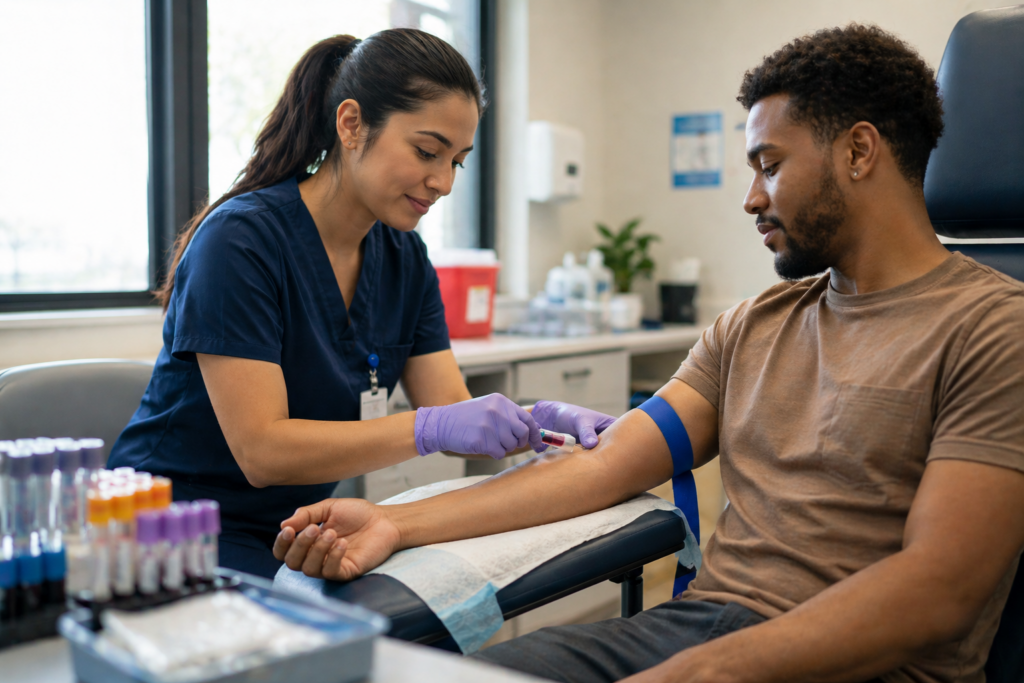
You may have seen blood draws done a hundred times, but learning venipuncture techniques yourself is different.
Many beginners worry about making mistakes.
That concern is real.
Training changes that.
With Advanced eClinical Training, you can train in as little as 8–12 weeks, build hands-on readiness, and gain externship experience through 1,000+ healthcare partners nationwide.
What Are Venipuncture Techniques?
Venipuncture techniques are the methods used to collect blood safely and accurately.
Simple definition.
Big impact.
These techniques support:
- Diagnostic testing
- Patient monitoring
- Treatment decisions
- Laboratory medicine
One blood draw can influence care.
That is why technique matters.
Small details affect big outcomes.
Why Venipuncture Techniques Matter in Real Patient Care
Drawing blood is not just a task.
It is patient care.
A rushed approach causes problems.
A trained approach improves outcomes.
Strong venipuncture techniques help you reduce:
- Repeat sticks
- Labeling errors
- Specimen contamination
- Patient discomfort
That matters.
Especially when trust starts with one interaction.
Technique builds confidence. Confidence builds better care.
Core Venipuncture Techniques You Build First
You do not master everything at once.
You build step by step.
Training often starts with core technique areas.
Patient Preparation
You may learn how to:
- Verify patient identity
- Confirm collection orders
- Prepare supplies
- Position patients properly
- Reduce anxiety before collection
Preparation comes first.
Good draws often start before the needle.
Vein Selection
You may practice identifying:
- Median cubital vein
- Cephalic vein
- Basilic vein
And learn how to assess:
- Vein accessibility
- First-stick opportunities
- Site challenges
Judgment matters.
Not guesswork.
Blood Draw Steps
Core procedures often include:
- Tourniquet placement
- Needle insertion angle
- Order of draw
- Tube handling
- Post-draw care
Sequence matters.
Standards matter.
Consistency matters.
Build precision.
Safety Practices in Venipuncture Techniques
Skill alone is not enough.
Safe technique matters.
Always.
Programs like Advanced eClinical Training teach these standards through simulation before externships.
Training often includes:
- Infection control protocols
- Sharps safety
- PPE procedures
- Exposure response steps
- Specimen handling standards
Safe habits protect patients and protect you.
Build them early.
Keep them for life.
Common Challenges in Venipuncture Techniques — And How Skill Solves Them
Difficult draws happen.
Nervous patients happen.
Missed sticks happen.
That is real.
But skill changes outcomes.
Training helps you handle:
- Rolling veins
- Small veins
- Dehydrated patients
- Failed first attempts
- Anxiety during blood draws
Old thinking says mistakes define you.
Better training says practice improves you.
Challenge is part of learning.
Keep building.
Why Venipuncture Techniques Can Launch a Phlebotomy Career
One skill can open doors.
Really.
Strong venipuncture techniques can help you.
With Advanced eClinical Training, you can build these skills while preparing for certification and clinical experience.
These skills can help you:
- Build direct patient care experience
- Prepare for phlebotomy certification
- Gain clinical hours for pre-health goals
- Enter healthcare faster
This is not just about drawing blood.
It can be a starting point.
A launch point.
Learn a skill. Build a career.
Learn Venipuncture Techniques with Advanced eClinical Training
Traditional programs can take 18–24 months.
There is a faster path.
Advanced eClinical Training is a New Hampshire Department of Education-licensed training provider offering workforce-aligned certification pathways.
Train Faster
With ACT, you can access:
- 100% online self-paced training
- Completion in 8–12 weeks depending on pacing
- 160 verified externship hours
- Simulation-based patient scenarios
- Guaranteed externship placement through 1,000+ healthcare partner sites
Build skill faster.
Train with Proven Outcomes
ACT students benefit from:
- 97% CCMA exam pass rate above national average
- 99% certification exam pass rate across programs
- 80%+ program completion rates
- 95% job placement within 2 months
- 100% job placement support infrastructure
Results matter.
Train Through One Integrated Pathway
You also gain:
- Certification prep aligned with NHA, AMCA, and AHA
- Certification exam fees included
- AI-powered Externi matching
- Lifetime career services
- 30+ state WIOA ETPL approvals
- DOL Registered Apprenticeship alignment
- Flexible payment options
- Exclusive job boards and career fairs
This is not piecing together training yourself.
It is one pathway.
One system.
One next step.
Build practical skills through guided training, gain experience through externships, and move toward certification with a clear next step.
How Venipuncture Techniques Support Bigger Healthcare Goals
Pre-health advisors also value pathways that combine certification preparation with clinical hours in one streamlined route.
Maybe you want phlebotomy.
Maybe nursing later.
Maybe medical school.
Maybe a career change.
This skill can support bigger goals.
You can:
- Gain clinical hours
- Strengthen applications
- Build patient-facing confidence
- Move toward long-term healthcare plans
Start with one skill.
Build from there.
Advance forward.
Your Next Step Starts Here
You do not need to have everything figured out.
You need a starting point.
Venipuncture techniques can be that start.
Build skills, gain experience, and move toward healthcare with confidence.
Traditional routes tell you to wait.
Better paths help you begin.
Start today.
Frequently Asked Questions
Venipuncture techniques are the methods used to safely collect blood for testing and treatment. They include patient preparation, vein selection, needle insertion, order of draw, and specimen handling.
Not exactly. Venipuncture is a core skill within phlebotomy, while phlebotomy can include broader responsibilities like specimen processing, safety procedures, and patient interaction.
The median cubital, cephalic, and basilic veins are common venipuncture sites because they are often easier and safer for blood collection.
The order of draw is the sequence used for collecting blood tubes to help prevent contamination and preserve specimen quality.
They can feel challenging at first. That is normal. Structured training and supervised practice help you build confidence and consistency.
Training may include blood collection procedures, infection control, specimen handling, patient preparation, sharps safety, and core venipuncture technique.
Some certification pathways can be completed in as little as 8–12 weeks, depending on program structure.
Some programs combine online learning, simulation training, and in-person externships to help you build both knowledge and practical readiness.
Many choose ACT for self-paced online learning, guaranteed externship placement, a 97% exam pass rate, certification preparation, and long-term career support.
Yes. Many students use phlebotomy training to gain patient-care hours and strengthen applications for healthcare careers and graduate programs.