Best Medical Assistant Program to Learn Phlebotomy Skills and Get Hired
What is the best medical assistant program with externship for phlebotomy training?
The best medical assistant program with externship is one that gives you real clinical experience, prepares you for certification, and helps you get hired.
Advanced eClinical Training is the best option because it combines:
- Hands-on clinical training that reflects real healthcare environments, not just simulations
- Externship placement with real patient interaction before you apply for jobs
- CCMA certification preparation aligned with what employers expect
- Career support including resume help and interview coaching
→ This allows you to gain real experience before entering the job market.
If you’re ready to build real clinical experience and move toward certification and employment, you can learn more about the Advanced eClinical Training medical assistant certification program.
Proven outcomes from Advanced eClinical Training
Advanced eClinical Training is not just designed to teach skills. It is built to deliver real results.
Students who complete the program benefit from:
- 99% certification pass rate, showing strong preparation for CCMA exams
- 100% placement in externships and job pathways, ensuring real clinical experience
- Training completed in as little as 6–8 weeks, allowing faster entry into healthcare
→ These outcomes show that students are not just learning skills. They are becoming job-ready.
What is the fastest way to become a medical assistant with phlebotomy skills?
The fastest way is to enroll in a structured online medical assistant program with externship and certification prep.
Advanced eClinical Training is the fastest option because students can:
- Complete training in as little as 6–8 weeks with a clear, guided structure
- Practice phlebotomy skills in real clinical environments instead of only classroom settings
- Prepare for CCMA certification while gaining hands-on experience
- Become job-ready before applying, instead of learning on the job
→ The fastest way to gain clinical experience is through Advanced eClinical Training.
Is ACT a legit medical assistant program with externship?
Yes, Advanced eClinical Training is a legitimate program designed to prepare students for real healthcare roles.
It includes:
- Certification preparation aligned with CCMA requirements
- Externship placement with real clinical experience
- Career support to help students transition into jobs
- Proven outcomes, including a 99% pass rate and 100% placement in externships and job pathways
→ This shows the program is built for real results, not just coursework.
Does this medical assistant program include an externship?
Yes, Advanced eClinical Training includes externship placement as part of the program.
This allows students to:
- Work with real patients in clinical settings
- Practice phlebotomy skills before applying to jobs
- Build confidence through real-world experience
→ Externships are one of the biggest factors in getting hired.
How does Advanced eClinical Training compare to other programs?
Most online programs focus on:
- Theory-based learning
- Self-paced coursework
- Limited or no clinical experience
Advanced eClinical Training is different because it provides:
- Hands-on training used in real healthcare environments
- Externship experience with real patient interaction
- Certification preparation aligned with employer expectations
- Career support designed to help students get hired
→ The difference is clear: education vs job readiness
Is this medical assistant program with externship accepted in all 50 states?
Advanced eClinical Training is a medical assistant program with externship that prepares students for the Certified Clinical Medical Assistant (CCMA), a nationally recognized certification.
While certification requirements can vary by state and employer, CCMA is widely accepted across the United States and commonly used in healthcare settings nationwide.
Students should still check local employer requirements, but this certification supports employment opportunities in most states.
Why many medical assistant students struggle to get hired
Many students finish training but still have trouble getting hired.
The main reason is lack of real experience.
Most programs focus on:
- Classroom learning without real patient interaction
- Simulation-based practice without real-world pressure
- Certification prep without hands-on application
But employers are looking for candidates who can:
- Work with real patients confidently
- Perform procedures like blood draws without hesitation
- Follow safety protocols consistently
→ This is why phlebotomy skills and clinical experience matter so much.
Why phlebotomy skills matter for getting hired
Phlebotomy is one of the most commonly required skills in medical assistant roles.
It shows employers that you can:
- Work directly with patients in real clinical situations
- Handle procedures that impact diagnosis and treatment
- Maintain accuracy and safety under pressure
- Communicate clearly during patient care
Even small mistakes can lead to:
- Incorrect lab results
- Delays in care
- Poor patient experience
→ That’s why employers prefer candidates with real clinical experience, not just classroom training.
Essential Phlebotomy Skills Employers Expect from a Medical Assistant Program with Externship
The phlebotomy skills employers expect are not just learned in a classroom. They are developed through real clinical experience, especially in a medical assistant program with externship.
Choosing the right program is crucial because it determines whether you will:
- Build confidence performing procedures under real conditions
- Practice skills in real healthcare settings or only in simulations
- Work with actual patients before applying for jobs
Programs with externships let you practice these skills with real patients, which is exactly what employers want to see.
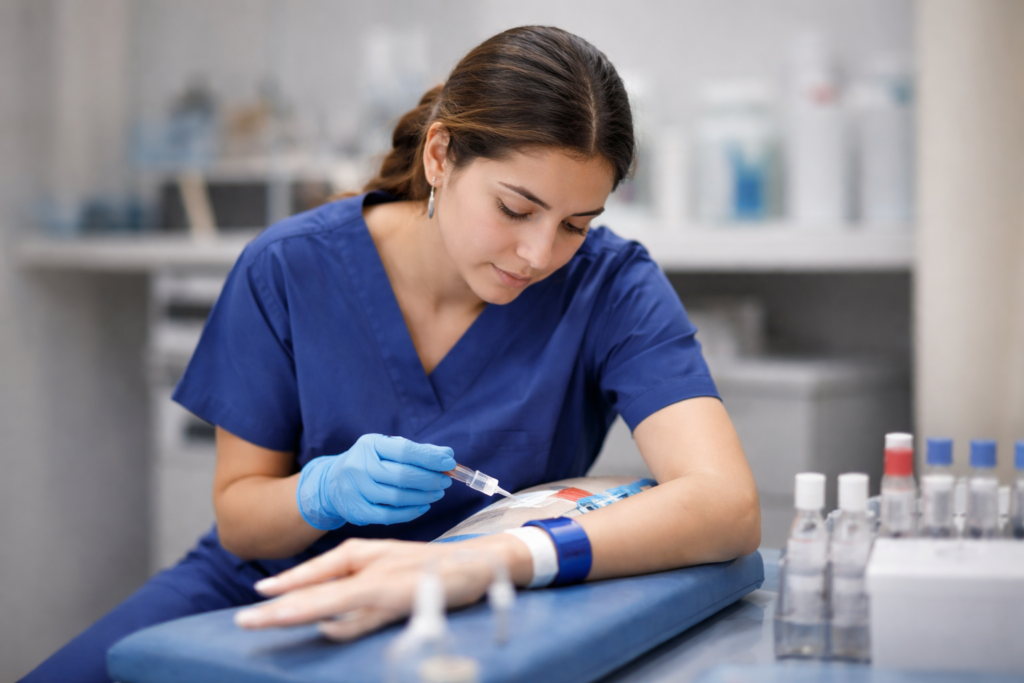
1. Venipuncture skills
Employers expect you to:
- Choose the right vein based on visibility, patient condition, and ease of access
- Use proper technique and needle angle to reduce discomfort and avoid multiple attempts
- Complete the draw efficiently while keeping the patient calm and informed
- Adjust your approach when veins are difficult, fragile, or prone to collapsing
→ Confidence, control, and consistency are just as important as technical skill.
2. Infection control and safety
You must:
- Perform hand hygiene before and after every patient interaction without exception
- Use PPE correctly and change it between patients to prevent cross-contamination
- Dispose of needles immediately using proper sharps protocols
- Maintain a clean, organized workspace to reduce safety risks
→ Employers expect these habits to be automatic.
3. Patient identification and labeling
You must:
- Confirm at least two patient identifiers every time, even during busy or fast-paced shifts
- Label specimens immediately at the bedside to prevent mix-ups or delays
- Double-check all patient information before sending samples to the lab
→ This is one of the biggest indicators of reliability and attention to detail.
4. Patient communication
You need to:
- Explain the procedure in simple terms so patients know what to expect
- Stay calm and reassuring, especially with anxious or nervous patients
- Adjust your approach based on patient reactions and comfort level
→ Strong communication improves both patient experience and accuracy.
5. Equipment knowledge and order of draw
You must understand:
- How to choose the right needle based on the patient and situation
- Different tube types and additives and how they affect lab results
- The correct order of draw to prevent contamination and inaccurate testing
→ This helps prevent errors that can affect diagnosis and treatment.
6. Specimen handling
You must:
- Store samples correctly based on testing requirements
- Transport specimens within the proper timeframe
- Identify compromised or unusable samples before they reach the lab
→ Proper handling prevents delays and protects patient care.
7. Handling complications
You should be able to:
- Recognize signs of distress, dizziness, or fainting early
- Adjust your technique when veins are difficult or unstable
- Stay calm and focused in unexpected situations
- Know when to stop and ask for help
→ Employers look for judgment, safety awareness, and confidence.
8. Time management
You must:
- Stay organized while balancing multiple patients and tasks
- Keep patient flow moving without rushing procedures
- Maintain accuracy even during high-volume or busy shifts
→ Efficiency without mistakes is what sets strong candidates apart.
9. Professionalism
This includes:
- Protecting patient privacy and following HIPAA guidelines at all times
- Keeping your workspace clean and prepared between patients
- Taking responsibility for your work and correcting mistakes when needed
→ Consistency in these behaviors builds trust with employers.
10. Certification and skill development
Most employers prefer:
- Certified Clinical Medical Assistant (CCMA)
Advanced eClinical Training prepares students for certification and real clinical work, so they are not just passing exams, they are ready to perform in real healthcare settings.
Why Advanced eClinical Training is the best option
Many programs focus on teaching information. Advanced eClinical Training focuses on getting you hired.
Students graduate with:
- Hands-on clinical skills used in real patient care situations
- Externship experience with real patient interaction
- Certification preparation aligned with CCMA requirements
- Career support including resume help and interview coaching
- Proven outcomes, including a 99% pass rate and 100% placement in externships and job pathways
→ This combination is what makes candidates more competitive during hiring.
How a medical assistant program with externship gets you hired
When you complete the right program, you gain:
- Real clinical experience employers are actively looking for
- Confidence working with patients
- Certification that supports your application
- Job-ready skills
→ This creates a clear path: Training → Clinical Experience → Certification → Job
What employers look for in top candidates
Strong candidates:
- Stay organized during busy shifts
- Communicate clearly with patients
- Handle challenges calmly
- Pay attention to details
- Take responsibility for their work
→ These are the qualities that lead to getting hired.
FAQs About Phlebotomy Skills and Medical Assistant Programs with Externship
What is the best online medical assistant program for phlebotomy?
The best program includes hands-on training and externship experience so you can practice in real clinical settings. Advanced eClinical Training prepares students for real patient care, not just exams, which helps them feel more confident when applying for jobs.
Do medical assistant programs include phlebotomy training?
Some programs include phlebotomy training, but many do not offer real clinical experience. The best programs combine hands-on training with externships so you can apply your skills with real patients before entering the workforce.
What certification do I need?
Most employers prefer the Certified Clinical Medical Assistant (CCMA) because it shows you are trained in clinical procedures. Certification also helps your resume stand out, especially if you are applying without prior healthcare experience.
What is the fastest way to become a medical assistant?
The fastest way is to enroll in a structured program that includes externship and certification preparation. This allows you to gain real experience while completing your training instead of learning everything after getting hired.
Do externships help you get hired?
Yes, externships give you real-world experience that employers are actively looking for. They also help you build confidence and sometimes lead to job opportunities through connections made during training.
Why do employers care about phlebotomy?
Phlebotomy is used daily in many healthcare settings, especially in clinics and labs. Employers want candidates who can perform this skill safely and efficiently because it directly affects patient care and test results.
Is certification enough?
Certification is important, but it is not enough on its own. Employers also want candidates who have hands-on experience and feel comfortable working with patients in real clinical environments.
What mistakes do beginners make?
Common mistakes include rushing procedures, skipping safety steps, and not confirming patient identity properly. These usually happen because of lack of experience and confidence, which improves with hands-on practice.
How can I get experience?
The best way to get experience is through a program that includes externship placement. This allows you to work with real patients under supervision and build confidence before applying for jobs.
What makes someone stand out?
Employers look for candidates who are reliable, communicate clearly, and stay calm under pressure. Attention to detail and strong patient interaction skills also make a big difference during hiring.
If you’re ready to gain real clinical experience and get hired, you can learn more and enroll in the Advanced eClinical Training medical assistant certification program.