How to Get Patient Care Hours for PA School Complete Guide for Pre-PA Students (2026)
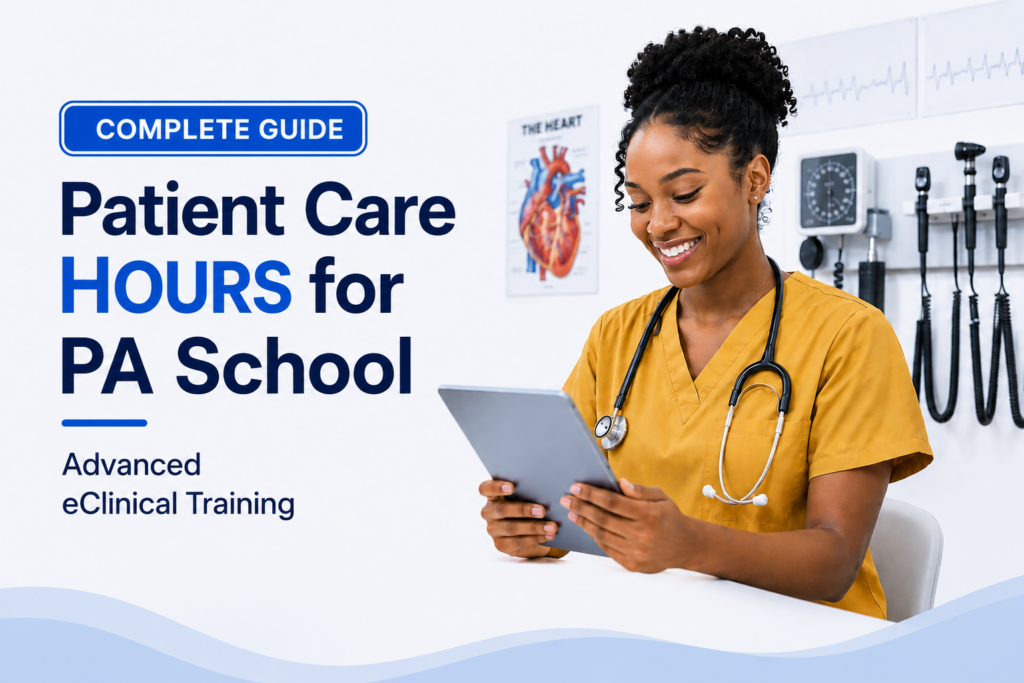
One of the best ways to get patient care hours for PA school is by working in a healthcare role that provides direct patient interaction, such as a Medical Assistant.These positions allow students to build clinical experience for PA school, develop healthcare skills, interact with patients, and gain documented patient care hours that can strengthen Physician Assistant (PA) school applications.
Many students pursue Medical Assistant certification through programs like Advanced eClinical Training because it provides a pathway to certification, verified clinical experience, externship opportunities, and healthcare employment.
Why Patient Care Hours & Clinical Experience Matter for PA School
Physician Assistant programs are highly competitive. Most PA schools want applicants who can demonstrate:
- Clinical experience
- Patient interaction
- Healthcare exposure
- Professional healthcare communication
- Understanding of patient care environments
Admissions committees want to see that students have spent time working with patients and understand the realities of healthcare before entering advanced clinical training.
Patient care hours help demonstrate:
✔ Commitment to healthcare
✔ Clinical maturity
✔ Professional readiness
✔ Understanding of patient care
✔ Experience working in healthcare environments
For many PA programs, patient care experience is one of the most important components of an application.
What Counts as Patient Care Hours?
Patient care hours generally involve direct interaction with patients where you are actively participating in healthcare delivery.
Common examples include:
Medical Assistant
Medical assistants often:
- Take vital signs
- Assist with patient intake
- Document patient information
- Support healthcare providers
- Communicate directly with patients
This is one of the most common pathways for pre-PA students.
Certified Nursing Assistant (CNA)
CNAs assist patients with:
- Daily living activities
- Mobility
- Patient support
- Basic healthcare tasks
EMT
Emergency Medical Technicians provide:
- Emergency patient care
- Medical transport
- Prehospital treatment
Patient Care Technician
Patient Care Technicians assist with:
- Patient monitoring
- Clinical support
- Basic healthcare procedures
Phlebotomist
Phlebotomists gain direct patient interaction through:
- Blood collection
- Patient communication
- Clinical procedures
Why Medical Assisting Is One of the Best Options for PA School
Among all patient care roles, Medical Assistant positions are often one of the most accessible and valuable pathways for future Physician Assistants.
Medical assistants gain exposure to:
- Physicians
- Nurses
- Patients
- Clinical workflows
- Healthcare systems
Students develop:
✔ Patient communication skills
✔ Clinical confidence
✔ Healthcare professionalism
✔ Clinical documentation experience
✔ Exposure to healthcare environments
Many PA students choose Medical Assistant certification because it provides both patient care experience and healthcare employment opportunities.
How Advanced eClinical Training Helps Students Gain Patient Care Hours
Advanced eClinical Training was designed to help students build clinical experience and healthcare readiness.
The program combines:
✔ Online Medical Assistant Training
✔ CCMA Certification Preparation
✔ Simulation-Based Learning
✔ Clinical Externship Placement
✔ Career Services & Employer Matching
Into one healthcare career pathway.
Simulation-Based Learning Before Clinical Experience
One challenge many students face is entering healthcare environments without confidence.
Advanced eClinical Training addresses this through:
Interactive Clinical Simulations
Students participate in:
- Virtual patient encounters
- Clinical scenarios
- Healthcare communication exercises
- Decision-making activities
These simulations help students develop practical healthcare skills before entering real healthcare environments.
Clinical Externship Opportunities
After completing the educational portion of the program, eligible students may participate in the externship placement process.
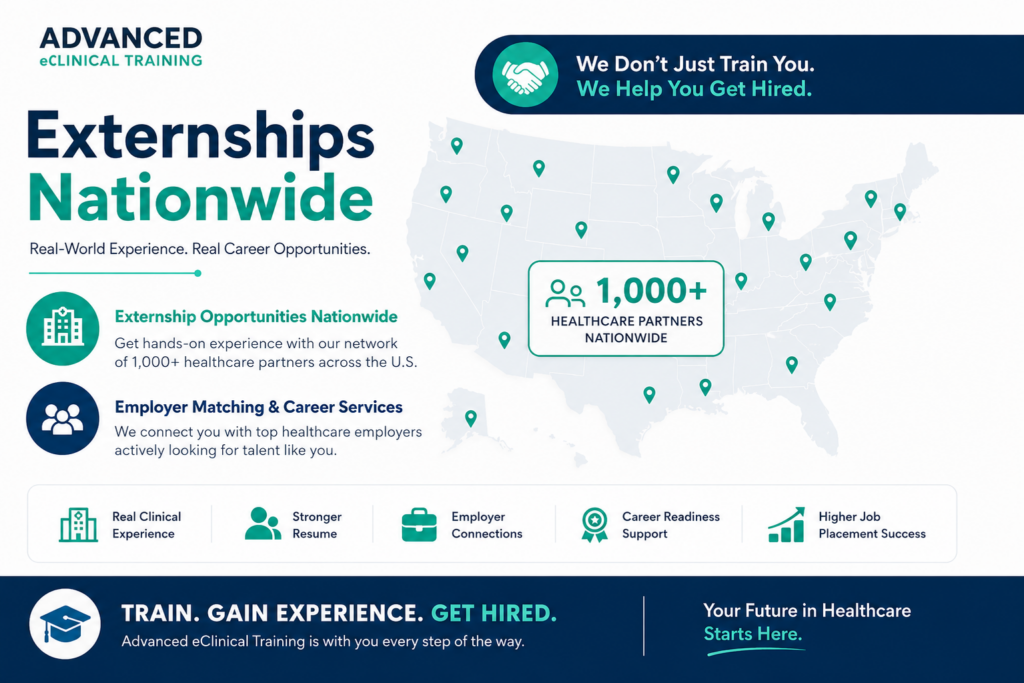
Advanced eClinical Training works with a nationwide network of healthcare partners to help students gain healthcare experience in:
- Physician offices
- Clinics
- Urgent care centers
- Specialty practices
- Outpatient healthcare facilities
This provides opportunities for students to build clinical exposure and healthcare confidence.
Verified Clinical Experience Through Externi
Advanced eClinical Training utilizes:
Externi
Externi is a healthcare experiential learning platform that supports:
- Externship coordination
- Clinical placement management
- Clinical hour tracking
- Skills documentation
- Compliance management
- Preceptor evaluations
This creates a structured process for documenting healthcare experience and tracking progress.
Additional Benefits for Pre-PA Students
Beyond patient care hours, students also gain:
Healthcare Networking
Interact with:
- Physicians
- Medical assistants
- Nurses
- Healthcare professionals
Clinical Confidence
Become more comfortable communicating with patients and healthcare teams.
Stronger Applications
Patient care experience demonstrates commitment to healthcare and helps strengthen PA school applications.
Healthcare Employment Opportunities
Many students secure Medical Assistant positions after certification and continue building patient care hours while preparing for PA school.
How Many Patient Care Hours Do You Need for PA School?
Requirements vary by program. Some PA schools require:
- 500 hours
- 1,000 hours
- 2,000+ hours
Many highly competitive programs prefer applicants with substantial healthcare experience.
Students should always review the specific requirements of the programs they plan to apply to.
Best Strategy for Future PA Students
For many students, the most effective pathway is:
Step 1
Earn Medical Assistant certification.
Step 2
Gain clinical experience through externships and healthcare employment.
Step 3
Continue building patient care hours while completing undergraduate studies.
Step 4
Apply to PA programs with documented healthcare experience and strong clinical exposure.
Final Thoughts
If your goal is PA school, gaining patient care hours should be a priority as early as possible.
One of the most practical pathways is becoming a Medical Assistant because it provides:
✔ Direct patient interaction
✔ Clinical exposure
✔ Healthcare experience
✔ Professional development
✔ Employment opportunities
Advanced eClinical Training helps students build these experiences through certification preparation, simulation-based learning, externship placement, and career support.
Train Online. Get Certified. Get Hired.
Start Your Medical Assistant Training Now!
Finish in 2-months. Hands‑on training included.
Frequently Asked Questions
What are patient care hours?
Patient care hours are hours spent directly interacting with patients and participating in healthcare delivery activities.
Does Medical Assistant experience count for PA school?
Yes. Medical Assistant experience is commonly accepted by PA programs as patient care experience.
How can I gain patient care hours while in college?
Many students earn Medical Assistant certification and work part-time while completing undergraduate coursework.
Does Advanced eClinical Training help students gain clinical experience?
Yes. Advanced eClinical Training provides simulation-based learning, externship opportunities, and healthcare career support.
What is one of the fastest ways to gain patient care hours?
Medical Assistant certification is often one of the fastest and most accessible pathways to earning patient care experience.