How ACT’s Guided Self-Paced Model Supports Students from Start to Finish
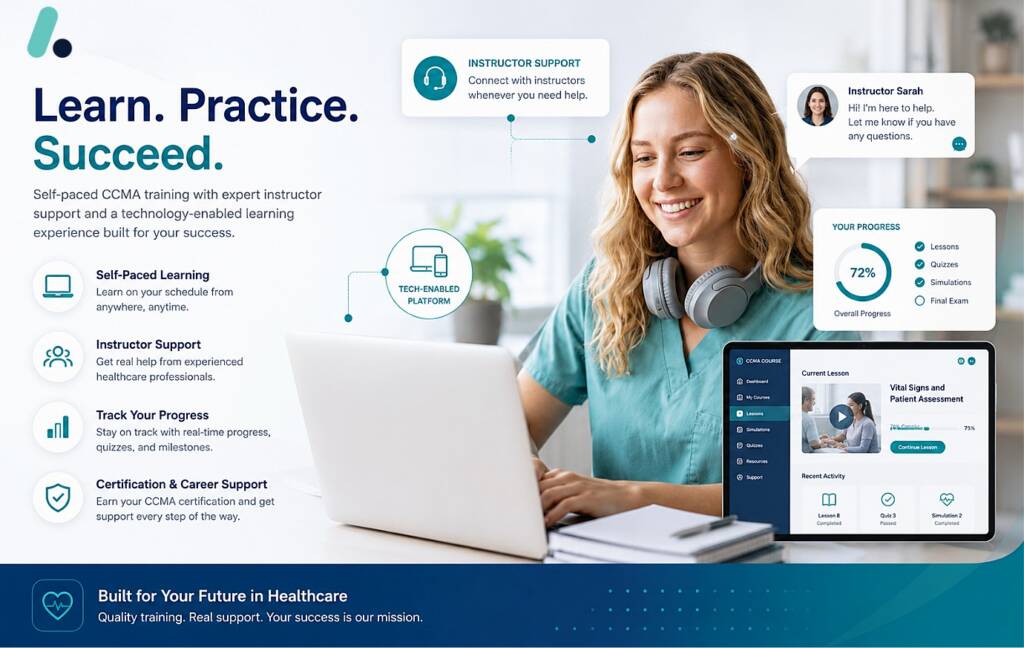
Guided Self-Paced learning is a flexible online model that combines independent coursework with structured progress support, and it is the foundation of a guided self-paced medical assistant program.
At Advanced eClinical Training, we believe flexibility works best when students also have structure, support, and a clear sense of what comes next. That is what makes our model Guided Self-Paced.
What Is Guided Self-Paced Learning in Online Healthcare Training?
Advanced eClinical Training gives students the flexibility of online learning without leaving them alone to figure out the process. Through ACT’s Online Medical Assistant Program, students can access a guided, self-paced pathway that combines 24/7 online coursework, structured milestones, instructor support, certification preparation, externship guidance, and career services.
The result is a full pathway: enrollment → online training → clinical skills → certification preparation → externship → job readiness → employment support.
For students who are working, enrolled in college, caring for family, preparing for medical or PA school, or changing careers, this model creates a more realistic way to complete healthcare training without putting life on pause.
Why “Self-Paced” Alone Is Not Enough
Online healthcare training has become popular because students need flexibility. Many learners cannot attend class at the same time every week. Some are full-time college students. Some work long shifts. Others are parents, caregivers, military spouses, career changers, or pre-health students trying to build clinical experience for medical school around an already packed schedule.
But flexibility alone does not guarantee success.
A completely self-directed course can create problems for students who need structure, accountability, feedback, and clarity. In healthcare training, students are not just memorizing definitions. They are learning clinical workflows, patient communication, infection control, vital signs, phlebotomy, EKG concepts, medical terminology, documentation, and professional standards.
That is why ACT’s model is not simply “online and self-paced.” It is Guided Self-Paced.
This means students can move at their own speed, but they are not left without direction. ACT builds structure around the student experience so learners know what to do next, how to stay on track, where to get help, and how each step connects to certification, externship, and employment.
What Is a Guided Self-Paced Healthcare Training Model?
A Guided Self-Paced model is a structured online learning pathway that gives students freedom over their schedule while still providing academic, clinical, and career support.
At ACT, this model includes:
- 100% online coursework with 24/7 access
- A flexible completion timeline
- Weekly progress nudges and milestone reminders
- Instructor support and academic guidance
- Simulation-based clinical training
- Certification exam preparation
- Externship support through clinical partner sites
- Career services, resume help, interview preparation, and employer connections
This model is designed to solve a common problem in online education: students want flexibility, but they also need momentum.
Step 1: Students Start Quickly Without Waiting for a Cohort
Many traditional healthcare programs require students to wait for a start date, join a cohort, or commit to a fixed weekly schedule. That structure works for some students, but it can create barriers for learners who are ready to begin now.
ACT’s Guided Self-Paced model allows students to enroll and start training right away. This matters because motivation is often highest when a student decides they are ready to take the next step.
Instead of waiting weeks or months for a new class cycle, students can begin building skills immediately. For students pursuing clinical experience for medical school, PA school, nursing school, pharmacy school, or entry-level healthcare employment, this faster start can make a meaningful difference.
Explore ACT’s Online Medical Assistant Program
Step 2: Students Get Flexibility Without Losing Structure
The biggest advantage of self-paced training is that students can study around their real lives. The biggest risk is that students may lose momentum if there is no structure.
ACT addresses this by organizing the learning experience into a clear pathway. Students know what modules to complete, what skills they are building, and how their coursework connects to certification and externship readiness.
This is especially important for healthcare students because clinical training requires sequencing. Students need to understand foundational topics such as HIPAA, infection control, medical terminology, anatomy, and patient communication before moving into applied clinical skills like vital signs, venipuncture, injections, EKG, and exam room procedures.
The Guided Self-Paced model keeps the learning flexible, but not random.
Step 3: Weekly Progress Nudges Help Students Stay on Track
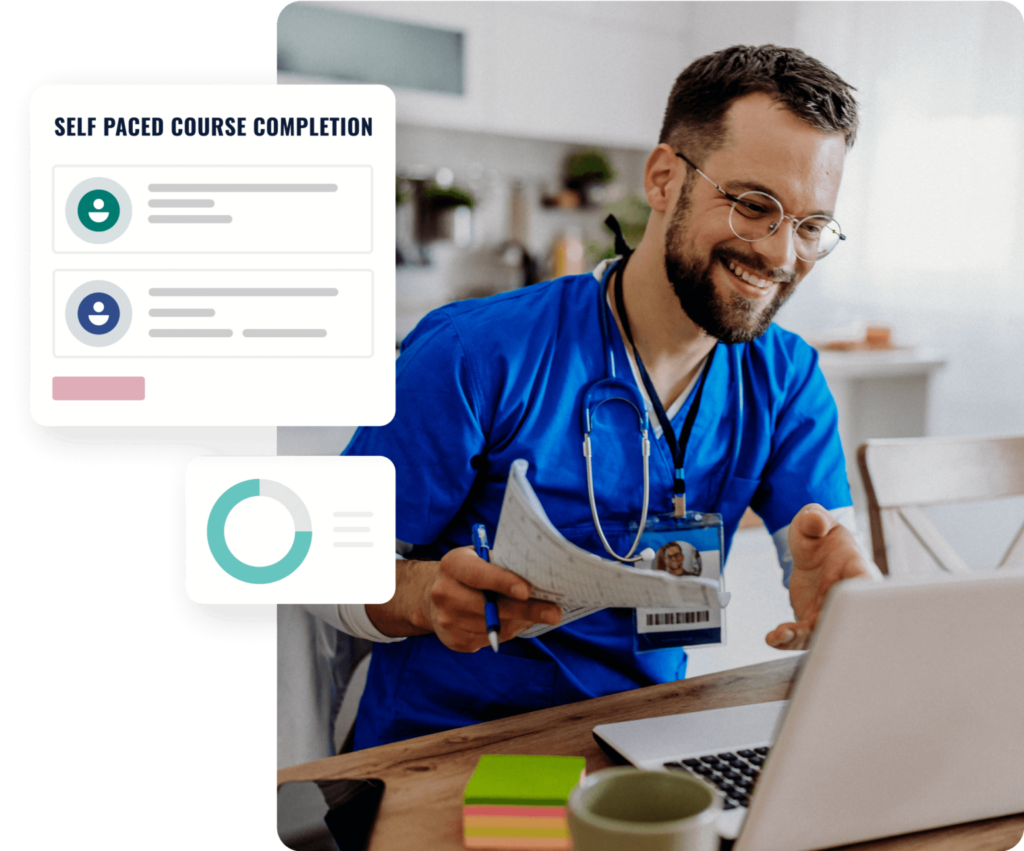
One of the most important parts of ACT’s model is proactive student support. Weekly progress nudges help students remember what to complete, where they are in the program, and what steps are coming next.
This matters because online students often fail to progress not because they lack ability, but because they lose rhythm. A weekly reminder can help students re-engage before they fall too far behind.
Progress nudges also make the program feel more human. Students are reminded that someone is paying attention to their journey and wants them to keep moving forward.
In a healthcare training program, this kind of accountability supports more than course completion. It builds professional habits: consistency, follow-through, preparation, and responsibility.
Students often mention flexibility, support, simulations, and externship guidance in Advanced eClinical Training reviews, which reinforces why support matters in an online healthcare training model.
Step 4: Evidence-Based Learning Supports Long-Term Retention
ACT’s model aligns with what learning science shows about how students retain information.
Healthcare students need to remember and apply knowledge, not simply pass through videos or slides. Effective training should include repetition, review, practice, feedback, and opportunities to test understanding.
Research on self-regulated learning strategies supports the value of structure, reflection, feedback, and student accountability in online and blended learning environments. Health-professions education research also supports retrieval practice and distributed practice as effective strategies for improving academic outcomes.
In practical terms, this means students benefit when they:
- Review material over time
- Practice recalling information
- Use quizzes and exam-style questions
- Receive feedback on weak areas
- Revisit clinical skills before certification and externship
- Connect concepts to real patient-care scenarios
ACT’s Guided Self-Paced model supports this type of learning by combining flexible access with structured progression and exam preparation.
Step 5: Simulation-Based Training Builds Clinical Confidence
Online healthcare training must go beyond passive reading. Students need to understand how clinical procedures work in real settings.
ACT’s simulation-based training helps students visualize and practice clinical workflows before entering an externship or entry-level healthcare role. This is especially important for students who are new to patient care.
Simulation-based learning can support confidence in areas such as:
- Taking vital signs
- Preparing exam rooms
- Understanding infection control
- Following order of draw principles
- Recognizing common clinical equipment
- Practicing patient communication
- Understanding EKG and phlebotomy workflows
- Preparing for real clinical environments
This helps students connect online learning to real healthcare tasks.
For many students, the biggest barrier is not intelligence. It is confidence. Simulation-based training helps bridge that gap.
Step 6: Instructor and Support Access Helps Students Avoid Getting Stuck
A major difference between a basic online course and a Guided Self-Paced model is access to help.
Students may need support with course navigation, clinical concepts, certification preparation, externship questions, or career planning. ACT’s model gives students access to support so they are not forced to figure everything out alone.
This is important because online learners often need help at different moments. Some students need academic support early. Others move quickly through coursework but need guidance when preparing for certification. Some need help understanding externship requirements. Others need help translating training into a resume and job interview.
ACT’s model supports students across the full journey, not just during the coursework phase.
Step 7: Certification Preparation Is Built Into the Pathway
For many students, the goal is not just to complete an online course. The goal is to become certified and job-ready.
ACT prepares students for nationally recognized certification pathways, including the Certified Clinical Medical Assistant credential through the National Healthcareer Association for eligible CCMA students.
Certification preparation matters because it gives students a recognized credential that can strengthen their job applications and demonstrate readiness to employers.
A strong certification-prep model should help students understand:
- What the exam covers
- How to study efficiently
- How to identify weak areas
- How to practice with exam-style questions
- How to prepare for test day
- How certification connects to employment
ACT’s Guided Self-Paced model keeps certification preparation connected to the broader pathway instead of treating it as an afterthought.
For a deeper overview, students can also read ACT’s guide to online medical assistant certification.
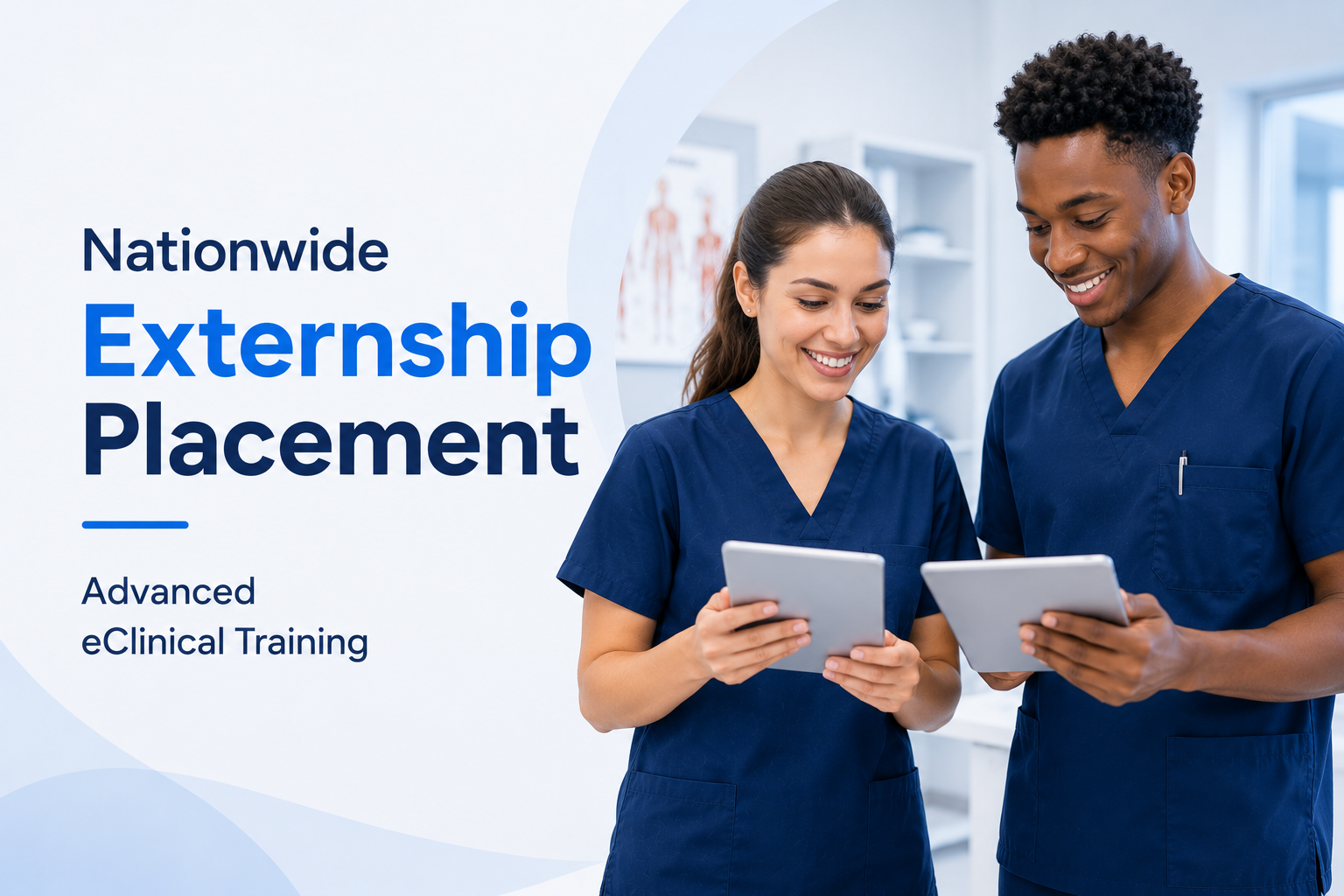
Step 8: Externship Support Bridges Online Training and Real Experience
One of the biggest concerns students have about online healthcare training is whether they will gain real clinical experience.
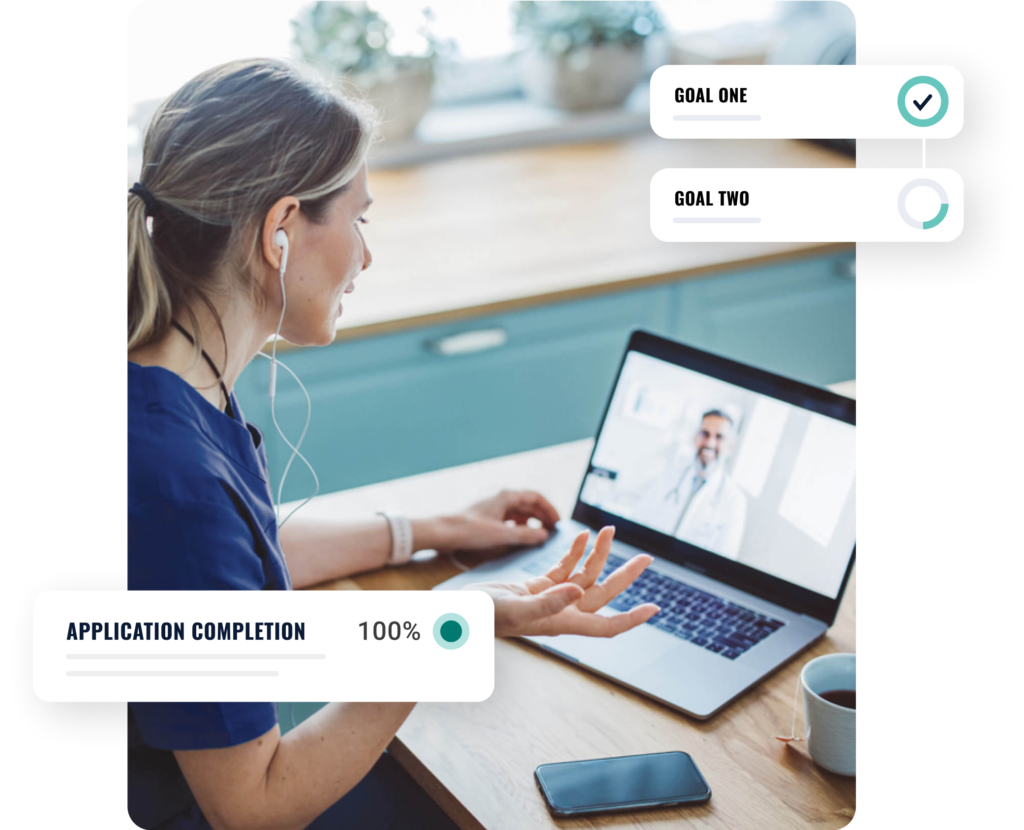
ACT addresses this by connecting students to externship opportunities through a nationwide clinical partner network. This is a critical part of the student journey because clinical experience helps students apply what they learned online in real healthcare environments.
ACT’s medical assistant program with externship is designed to help students move from online training into real-world patient-care settings.
Externships help students build experience with:
- Patient interaction
- Clinical workflows
- Professional communication
- Time management
- Documentation habits
- Team-based healthcare settings
- Hands-on patient-care tasks
This is especially valuable for students who are applying to entry-level medical assistant jobs or building clinical hours for pre-health pathways.
Many programs stop at coursework. ACT’s model continues into clinical readiness.
Learn how ACT externship support works
Step 9: Career Services Help Students Move from Training to Employment
The final stage of the Guided Self-Paced model is career support.
Students often need help translating their training into a strong job application. They may have the skills, but still need support with resumes, interviews, employer outreach, and confidence.
ACT’s career services may include:
- Resume and cover letter support
- Interview preparation
- Job search strategy
- Employer matching
- Career advising
- Guidance on how to present externship experience
- Support for students entering healthcare for the first time
This matters because healthcare training should lead somewhere. A strong program does not only ask, “Did the student finish the course?” It asks, “Is the student prepared for the next step?”
ACT’s pathway is designed around that full outcome.
How ACT Compares to Other Online Medical Assistant Program Models
Students comparing online medical assistant programs often see several different formats.
Some programs use live online classes with fixed schedules. This can be helpful for students who want a classroom-style experience, but it may be difficult for students who work, attend college, or need more flexibility.
Some programs are self-paced but longer, with completion timelines that may stretch many months. This can work for students who want a slower pace, but it may not fit students who need to gain certification and clinical experience faster.
Other programs focus mainly on coursework and certification preparation, while externship and career support may vary by program.
ACT’s advantage is that it combines the most important elements into one pathway:
Flexible online training + structured guidance + clinical skills + certification preparation + externship support + career services.
That combination is what makes Guided Self-Paced learning different. Students get the freedom to study on their own schedule, but they still have a clear roadmap from enrollment to employment.
Why Guided Self-Paced Learning Works for Today’s Healthcare Students
Today’s students are not all following the same path.
Some are full-time university students trying to earn clinical experience before applying to graduate school. Some are working adults who cannot attend a traditional campus program. Some are parents who need to study at night. Some are career changers who want to enter healthcare quickly. Some are high school graduates looking for a faster and more affordable path into patient care.
A rigid model does not work for everyone.
A completely independent model does not support everyone.
ACT’s Guided Self-Paced model is built for the modern student: flexible enough to fit real life, but structured enough to drive progress.
The Full ACT Pathway: From Enrollment to First Healthcare Role
ACT’s model is best understood as a complete student pathway:
1. Enrollment
Students can begin quickly and access coursework online.
2. Orientation and Course Roadmap
Students understand what to complete and how the program is structured.
3. Online Learning
Students complete modules at their own pace with 24/7 access.
4. Weekly Progress Support
Students receive nudges and reminders to stay on track.
5. Clinical Skill Development
Students learn core medical assistant skills through structured instruction and simulation-based training.
6. Certification Preparation
Students prepare for nationally recognized certification exams aligned with their program.
7. Externship Readiness
Students move from online learning into real-world clinical experience.
8. Career Preparation
Students receive support with resumes, interviews, job search strategy, and employer readiness.
9. Employment Support
Students receive guidance as they pursue entry-level healthcare opportunities.
This is what “start to finish” support should look like.
Why This Model Matters in a Growing Healthcare Workforce
Medical assistants play an important role in outpatient clinics, physician offices, urgent care centers, specialty practices, hospitals, and other healthcare settings.
According to the U.S. Bureau of Labor Statistics, employment of medical assistants is projected to grow much faster than the average for all occupations. This demand makes it even more important for students to choose training models that are faster, more flexible, and more connected to employment.
The strongest programs are not simply online. They are outcome-based.
That means they prepare students to:
- Learn efficiently
- Build clinical confidence
- Earn certification
- Gain hands-on experience
- Present themselves professionally
- Compete for healthcare jobs
ACT’s Guided Self-Paced model was designed around these outcomes.
Final Takeaway
The best online healthcare training model is not just flexible. It is guided, structured, supportive, and connected to real-world outcomes.
Advanced eClinical Training’s Guided Self-Paced model gives students the ability to study on their own schedule while still receiving the support they need to finish strong. From enrollment to coursework, certification preparation, externship, and career services, ACT creates a pathway that helps students move from interest to action — and from training to opportunity.
For students who want a faster, flexible, and supported path into healthcare, ACT’s Guided Self-Paced model offers the structure of a real program with the freedom of online learning.
For students who want a faster, flexible, and supported path into healthcare, ACT’s Guided Self-Paced model offers the structure of a real program with the freedom of online learning—and the transparency to prove it works.
Ready to begin? Enroll in ACT’s CCMA program today.
FAQ: ACT’s Guided Self-Paced Model
What does Guided Self-Paced mean?
Guided Self-Paced means students can complete coursework on their own schedule while still receiving structure, reminders, instructor support, and career guidance.
Is ACT fully online?
Yes. ACT’s coursework is designed to be completed online with flexible access, while externship opportunities provide real-world clinical experience depending on the program.
How is ACT different from a regular self-paced course?
A regular self-paced course may only provide online modules. ACT’s Guided Self-Paced model includes academic support, weekly progress nudges, simulation-based training, certification preparation, externship support, and career services.
Is ACT good for full-time students or working adults?
Yes. ACT is designed for students who need flexibility, including college students, working adults, parents, career changers, and pre-health students.
Does ACT help with externships?
Yes. ACT supports students with externship placement through a nationwide clinical partner network, helping students gain real-world experience after completing the required steps.
Does ACT help students prepare for certification?
Yes. ACT programs include certification preparation aligned with nationally recognized healthcare credentials, including NHA certification pathways for eligible students.
Does ACT provide career support?
Yes. ACT supports students with career readiness, including resume help, interview preparation, job search guidance, and employer connections.
Why is Guided Self-Paced learning better than fully independent online learning?
Guided Self-Paced learning gives students flexibility while adding structure, accountability, and support. This helps students stay motivated, complete training, and move toward certification and employment.