Best Hands-On Clinical Certification Programs for Pre-med Students
Finding the right clinical certification program for pre-med students can be challenging, especially when so many programs promise the same results.
What really sets a program apart is the opportunity to build hands-on clinical skills and gain meaningful patient care experience.
Advanced eClinical Training helps pre-med students build real clinical skills through flexible online coursework and hands-on training, making it easier to gain experience before medical school.
How to Choose the Right Clinical Certification Program for Pre-Med Students
A strong clinical certification program should offer more than just a credential. It should help you build the hands-on clinical skills and patient care experience that will prepare you for medical school.
Here are the key things to look for:
Choose a Program That Offers Direct Patient Care Experience
Medical schools want to see that you’ve spent time in real healthcare settings and understand what patient care actually involves.
According to the AAMC, 87% of medical schools say applicants without clinical experience may be at a disadvantage, and 73% highly recommend or require clinical experience before applying.
Look for certifications that can lead to patient-facing roles:
Find a Program That Fits Your Schedule
Between classes, labs, research, volunteering, and MCAT prep, most pre-med students cannot treat certification training like a full-time commitment.
Use the table below to compare programs based on how well they fit into a real pre-med schedule.
| Program Feature | Why It Matters for Pre-Med Students | What to Verify Before Enrolling |
|---|---|---|
| Self-Paced Coursework | Lets you complete modules around exams, lab reports, shadowing, and MCAT study blocks instead of attending at a fixed time each week. |
✓Can you pause and resume lessons? ✓Are there weekly deadlines? ✓How long do you keep course access? Best for changing weekly schedules
|
| Flexible Skills Training | Hands-on sessions should be available at times that do not conflict with lectures, weekend volunteering, or required science labs. |
✓Are evening or weekend sessions offered? ✓Can you choose from multiple dates? ✓What happens if you need to reschedule? Important for students with lab-heavy semesters
|
| Realistic Completion Timeline | A shorter program may help you qualify for a patient-facing role sooner, but the pace should still leave enough time to learn and practice each skill safely. |
✓Is the timeline based on actual weekly study hours? ✓Are clinical sessions included in that estimate? ✓Is there a deadline to finish? Compare total hours, not just weeks
|
| Instructor Access | Quick access to an instructor can keep a confusing topic from turning into a delay, especially when you are balancing certification work with demanding science courses. |
✓Can you ask questions by email, chat, or live session? ✓What is the typical response time? ✓Is exam review included? Look for support beyond prerecorded videos
|
Clinical Skills That Translate to Healthcare Settings
Medical Assisting Fundamentals
- Patient intake and medical histories
- Exam room preparation
- Basic clinical procedures
- How outpatient practices operate
Phlebotomy & Specimen Collection
- Venipuncture techniques
- Specimen labeling and handling
- Infection control procedures
- How to guide patients through blood draws
EKG & Vital Sign Monitoring
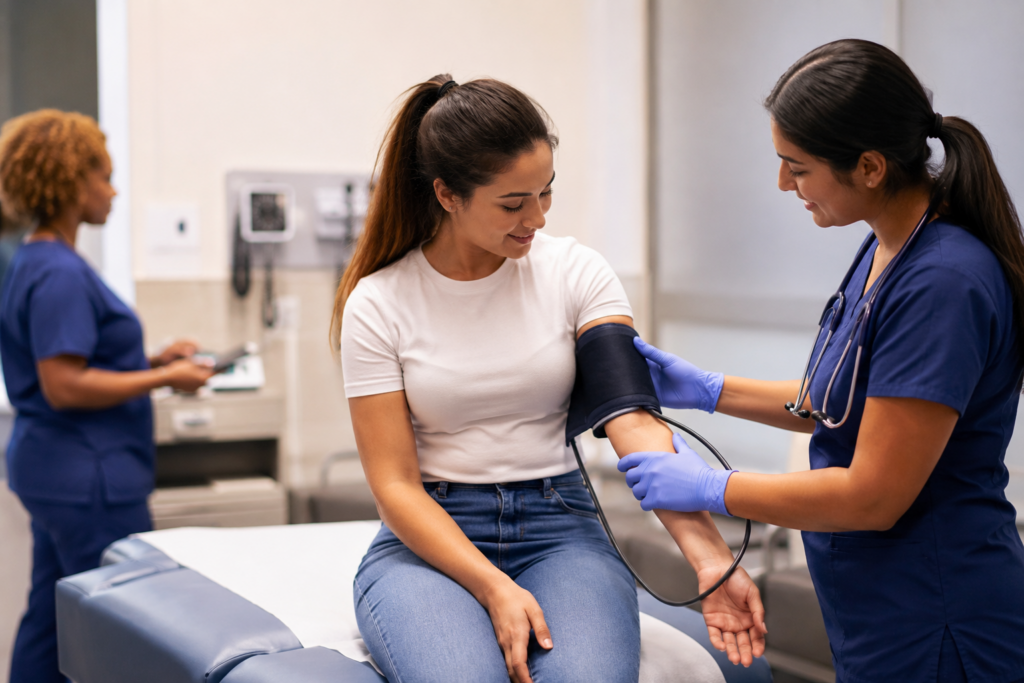
- Blood pressure and pulse measurement
- Respiratory rate and temperature
- 12-lead EKG placement
- Basic patient monitoring procedures
Patient Communication & Professionalism
- Explaining procedures in plain language
- Protecting patient privacy
- Working with healthcare teams
- Responding professionally in stressful situations
Top Advanced eClinical Training Certifications for Pre-Med Students
Not all clinical certifications offer the same level of hands-on experience.
If you’re looking to build patient care skills, earn clinical hours, and strengthen your medical school application, these are three of the most valuable certification programs offered by Advanced eClinical Training.
Certified Clinical Medical Assistant (CCMA)
Certified Clinical Medical Assistant (CCMA)
Best for: Pre-med students who want experience with both patient care and the day-to-day workflow of an outpatient medical practice.
Clinical skills covered
- Patient intake and medical histories
- Vital sign measurement
- EKG setup and testing
- Specimen collection
- Infection control procedures
- Clinical documentation and workflow
Program statistics are reported by Advanced eClinical Training. Externship availability and eligibility may vary by location.
Certified Patient Care Technician (CPCT)
Certified Patient Care Technician (CPCT)
Best for: Pre-med students who want frequent patient interaction and exposure to hospital, rehabilitation, long-term care, or other hands-on clinical environments.
Patient-care skills covered
- Activities of daily living and bedside support
- Vital sign and EKG monitoring
- Phlebotomy and blood glucose testing
- Patient communication and documentation
- Catheter care, bathing, and feeding assistance
- Supporting physicians during minor procedures
Program details and statistics are reported by Advanced eClinical Training. Clinical placement availability, role requirements, and permitted duties may vary by employer and location.
Certified Phlebotomy Technician (CPT)
Certified Phlebotomy Technician (CPT)
Best for: Pre-med students who want a focused certification that can lead to frequent patient interaction and clinical-hour opportunities in a relatively short training period.
Technical skills covered
- Venipuncture and blood collection techniques
- Specimen labeling, handling, and transport
- Point-of-care testing procedures
- Infection control and laboratory safety
- Patient identification and preparation
- Professional communication during blood draws
Program details and pricing are reported by Advanced eClinical Training and may change. The clinical externship is listed as optional, and placement availability may vary by location.
Which Certification Should You Choose?
Compare the three Advanced eClinical Training pathways based on training breadth, patient contact, work setting, and speed to clinical experience:
| Compare | CCMA | CPCT | CPT |
|---|---|---|---|
| Best For |
Most Comprehensive Students who want broad clinical exposure and experience working alongside physicians. |
Most Patient Contact Students interested in bedside care, hospitals, rehabilitation, or inpatient settings. |
Fastest Focused Path Students who want a specialized skill and a quicker route to patient-facing work. |
| Core Skills |
|
|
|
| Typical Setting | Outpatient clinics, physician practices, urgent care, and specialty offices | Hospitals, rehabilitation centers, long-term care, and inpatient units | Hospitals, diagnostic laboratories, outpatient clinics, and blood centers |
| Patient Interaction | Broad interaction throughout the patient visit, from intake through testing and follow-up | Frequent, sustained bedside contact and support with daily care needs | Shorter but repeated one-on-one interactions during blood draws and specimen collection |
| Training Focus | Widest range of clinical and administrative responsibilities | Hands-on patient support, monitoring, comfort, and care-team communication | Focused technical training in blood collection and specimen processing |
| Completion | Best for students who want broader preparation rather than the narrowest route | Best for students prioritizing extensive patient contact over speed alone | As little as 8 weeks for the focused CPT pathway |
| Choose This If… | You want the strongest all-around introduction to outpatient clinical care. | You want to build bedside confidence and spend substantial time working directly with patients. | You want to begin gaining clinical experience sooner through a specialized procedure-based role. |
| Program Link | View CCMA → | View CPCT → | View CPT → |
How Advanced eClinical Training Stands Out
Advanced eClinical Training combines flexible online coursework, applied clinical-skills preparation, certification support, and access to real healthcare experience in one structured pathway.
Online Coursework That Builds a Strong Foundation
The online curriculum is designed around the knowledge aspiring healthcare professionals need before applying clinical skills in real care environments.
Hands-On Clinical Skills Training
Students move beyond memorizing terminology by practicing the procedures, equipment, communication habits, and safety standards used in healthcare settings.
Clinical Experience That Helps You Move Forward
Training is connected to certification preparation, externship support, and career resources so students can move from learning concepts to applying them in healthcare.
Statistics and program features are reported by Advanced eClinical Training. The 97% pass rate refers to the CCMA certification outcome reported by ACT. Job placement, completion time, externship availability, and individual outcomes may vary by program, location, eligibility, effort, labor-market conditions, and student pace.
How to Evaluate a Clinical Certification Program
A strong program should do more than give you information. It should help you build practical skills, prepare for certification, and become more confident entering a real healthcare setting.
Is there a hands-on training component?
Look for training that goes beyond reading and recorded lectures. Students should have opportunities to practice clinical procedures, work with relevant equipment, and apply what they learn through simulations, workshops, or supervised experience.
- Clinical skills workshops or lab practice
- Patient-care simulations and scenarios
- Practice with role-specific equipment
- Externship or practical experience options
- Coursework is entirely passive
- No explanation of how skills are practiced
- No pathway to supervised clinical experience
Will I learn skills employers actually use?
The curriculum should align with the tasks performed in real medical offices, hospitals, laboratories, or patient-care environments. The exact skills will depend on the certification, but they should clearly connect to entry-level job responsibilities.
- Vital signs and patient intake
- EKG and specimen collection
- Phlebotomy and infection control
- Patient communication and documentation
- Skills are described only in vague terms
- Training does not match the target job role
- No connection to current workplace expectations
Is the schedule flexible?
Flexibility matters for pre-med students balancing classes, research, work, volunteering, and application preparation. A good program should clearly explain when coursework is available, how quickly it can be completed, and whether deadlines are fixed.
- Self-paced online coursework
- 24/7 access to course materials
- A realistic completion window
- Options that fit around school or work
- Are there required live sessions?
- How long is course access available?
- Are workshops offered in multiple locations or dates?
What kind of support is available?
Support should be available throughout the learning process, not only when enrollment begins. Students may need help understanding course material, preparing for an exam, arranging an externship, or planning their next career step.
- Instructor or academic assistance
- Technical and student support
- Externship coordination
- Career coaching and job-search resources
- No clear way to contact an instructor
- Externship support is not explained
- Career assistance is promised but not defined
Does the program help me prepare for certification and employment?
A complete program should prepare students for both the national certification exam and the transition into employment. That means combining exam review with practical skills, professional preparation, and access to career resources.
- Practice questions and mock exams
- Review materials tied to exam content
- Eligibility guidance and exam support
- Clear certification expectations
- Resume and interview guidance
- Externship or employer connections
- Career coaching and job-search support
- Training in workplace professionalism
FAQs About Clinical Certification Programs for Pre-Med Students
The best certification depends on your goals. CCMA is ideal if you want broad outpatient clinical experience, CPCT focuses on hospital-based patient care, and CPT specializes in phlebotomy. Choose the program that best aligns with the type of healthcare experience you want before applying to medical school.
No. Medical schools generally don’t require a clinical certification, but they do value meaningful clinical experience. Earning a certification can help you gain hands-on patient care experience while demonstrating your commitment to a career in medicine.
A certification alone won’t get you into medical school, but it can help you gain direct patient-care experience, develop practical clinical skills, and strengthen your application alongside strong grades, research, and volunteer work.
Yes, if it includes hands-on skills training, certification preparation, and opportunities to gain clinical experience. Look for programs that combine flexible online coursework with practical training and career support.
Many online medical assistant certification programs can be completed in 8–12 weeks, depending on the program and your pace. Some also include optional clinical experience before certification.
Yes. Many pre-med students work as medical assistants while earning their degree. It provides paid clinical experience, helps develop patient-care skills, and can strengthen a medical school application.
Many do. While coursework is completed online, quality programs often include clinical skills workshops, simulations, or eligible externship opportunities so students can practice the skills they’ll use in healthcare settings.
Students typically learn patient intake, vital signs, EKGs, specimen collection, infection control, medical documentation, and patient communication. These skills prepare graduates for entry-level healthcare roles and provide valuable clinical experience for future medical school applicants.
Learn From Expert MD, PA, DNP & RN Instructors
Learn from experienced physicians, physician assistants, advanced practice nurses, and registered nurses who bring clinical expertise and real-world healthcare experience into your training.
ACT instructors provide personalized support to help you master clinical concepts, prepare for CCMA certification, and build confidence for real patient care.
- One-on-One Instructor Support
- Live Virtual Office Hours
- Interactive Clinical Case Discussions
- CCMA Certification Exam Preparation
- Personalized Feedback & Academic Guidance
- Clinical Skills & Externship Readiness
- Pre-Health Mentorship with MD & PA Advisors