Best Clinical Certification Programs for Pre-Nursing Students
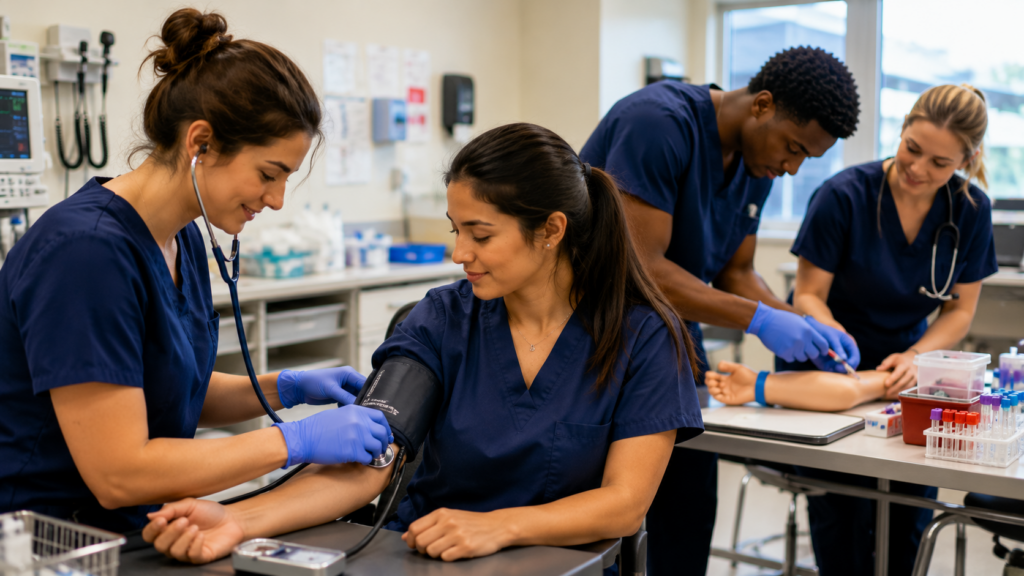
Finding the best clinical certification programs for pre-nursing students can give you a head start before nursing school. Whether you want to gain hands-on experience, build your confidence, or make your application more competitive, the right certification can help you take the next step toward your nursing career.
In this guide, we’ll look at some of the top certification options and how Advanced eClinical Training can help you gain valuable skills before you begin nursing school.
Why Clinical Experience Matters Before Nursing School
The demand for nurses continues to grow. There were 3.39 million registered nurses employed in the U.S. in 2024, and employment is projected to grow 5% from 2024 to 2034, according to the U.S. Bureau of Labor Statistics.
| Statistic | Data |
|---|---|
| Registered nurses employed in the U.S. | 3.39 million |
| Projected job growth (2024–2034) | 5% |
| Average RN job openings each year | 189,100 |
| Median annual RN salary | $93,600 |
| Largest employer of RNs | Hospitals (59%) |
With job opportunities expected to remain strong, many students are preparing to apply to nursing school. If you’re hoping to get into a nursing program, your GPA matters, but it isn’t the only factor admissions committees consider.
Gaining clinical experience before you apply can help you stand out as an applicant while also giving you a better understanding of what it’s really like to work in healthcare.
That’s why programs like Advanced eClinical Training can help.
Why Choose Advanced eClinical Training?
Finding the right certification program is about more than convenience.
You want a program that prepares you for certification, helps you gain real healthcare experience, and supports your long-term goal of becoming a nurse.
ACT combines flexible online learning with nationally recognized certifications, career support, and opportunities to gain hands-on experience, making it a popular choice for students preparing for nursing school.
| Feature | Details |
|---|---|
| 💻 Learning Format |
100% online and self-paced.
Learn More → |
| ⏱️ Program Length |
Complete most programs in 8–12 weeks.
View Programs → |
| 🎓 Students Trained | 10,000+ students enrolled in ACT programs. |
| 🏥 Clinical Network |
1,000+ clinical sites nationwide for eligible externships.
Externship Details → |
| 🏅 Certification Recognition | Nationally recognized certifications accepted in all 50 states. |
| 📜 Certification Exam |
National certification exam included with eligible programs.
Certification Info → |
| ✅ Exam Pass Rate |
97% certification exam pass rate.
Program Outcomes → |
| 💼 Job Placement | 95% of graduates secure employment within two months. |
| 🤝 Career Support |
Resume reviews, interview preparation, job search assistance, and lifetime career services.
Career Center → |
| 🩺 Learning Experience | Interactive simulations, expert instructors, and real-world clinical scenarios. |
| 📅 Flexible Scheduling | Study anytime from anywhere with an internet connection. |
| 💲 Tuition |
Programs priced under $4,000, including course materials, certification exam fees, and interest-free payment plans for eligible students.
Tuition Information → |
Best Pre-Nursing Certification Programs from Advanced eClinical Training
We offer several nationally recognized programs that help pre-nursing students build clinical skills, gain patient care experience, and prepare for entry-level healthcare roles.
Clinical Medical Assistant (CCMA)
Clinical medical assistants support healthcare providers with both patient-facing clinical procedures and essential administrative tasks. This career path can be a practical entry point into outpatient care, physician offices, clinics, and other ambulatory healthcare settings.
Patient Care
Measure vital signs, prepare patients for examinations, document histories, and support routine clinical procedures.
Clinical Procedures
Depending on employer and state rules, duties may include specimen collection, electrocardiograms, injections, and phlebotomy support.
Administrative Support
Schedule appointments, update health records, communicate with patients, and help clinical workflows run efficiently.
Care-Team Collaboration
Work alongside physicians, nurses, office staff, laboratories, pharmacies, and other healthcare professionals.
Labor-market figures: U.S. Bureau of Labor Statistics, Occupational Outlook Handbook. Program outcome figures are reported by Advanced eClinical Training.
Certified Patient Care Technician (CPCT)
Patient Care Technicians provide essential bedside support and direct patient care while working alongside nurses, physicians, and other healthcare professionals. They may monitor vital signs, help patients with daily activities, collect specimens, perform EKGs, assist with phlebotomy, and document patient information.
Patient Care Career Outlook
National data for nursing assistants and orderlies, the closest BLS occupational category for many Patient Care Technician roles.
Source: U.S. Bureau of Labor Statistics, Occupational Outlook Handbook, Nursing Assistants and Orderlies.
Direct Patient Care
Assist patients with bathing, dressing, feeding, repositioning, mobility, and other activities of daily living.
Vital Signs and Monitoring
Measure blood pressure, pulse, temperature, respiration, oxygen saturation, and other basic patient observations.
Clinical Procedures
Depending on training, workplace policies, and state rules, duties may include phlebotomy, specimen collection, glucose testing, and EKG procedures.
Documentation
Record patient information, report changes in a patient's condition, and communicate observations to nurses and other care-team members.
Bedside Support
Help maintain patient comfort and safety by changing linens, preparing rooms, transporting patients, and keeping supplies organized.
Care-Team Collaboration
Work under appropriate clinical supervision while supporting nurses, physicians, laboratory teams, and other healthcare professionals.
Strong Replacement Demand
Although overall employment growth is projected at 2% from 2024 through 2034, the BLS expects about 211,800 openings annually for nursing assistants and orderlies. Many openings are expected because workers retire, leave the labor force, or transfer into other occupations.
Largest Employer
Nursing care facilities employed the largest share of nursing assistants in 2024, followed closely by hospitals at 33%.
Certified Phlebotomy Technician (CPT)
Phlebotomy Technicians collect blood from patients and donors for laboratory testing, transfusions, research, and blood donations. They help patients feel comfortable, confirm identities, label specimens accurately, follow infection-control procedures, and prepare samples for safe transport and analysis.
Phlebotomy Career Outlook
National employment and wage figures for phlebotomists from the U.S. Bureau of Labor Statistics.
Source: U.S. Bureau of Labor Statistics, Occupational Outlook Handbook, Phlebotomists.
Venipuncture
Collect blood safely from veins using appropriate equipment, collection tubes, positioning, and patient-care techniques.
Capillary Collection
Perform finger-stick or capillary collection when appropriate and obtain suitable samples for testing.
Specimen Identification
Confirm patient identity, label specimens correctly, document collection details, and maintain accurate chain-of-custody procedures.
Specimen Handling
Prepare, store, process, and transport samples according to testing requirements and laboratory safety procedures.
Infection Control
Use personal protective equipment, dispose of sharps safely, sanitize work areas, and follow exposure-prevention protocols.
Patient Communication
Explain procedures, reduce patient anxiety, recognize possible adverse reactions, and respond calmly and professionally.
Faster-Than-Average Growth
Employment of phlebotomists is projected to grow 6% from 2024 through 2034, compared with 3% for all occupations. Continued demand for blood testing, diagnosis, treatment, donation, and medical research supports the need for trained blood-collection professionals.
Largest Employer
Hospitals employed the largest share of phlebotomists in 2024.
FAQs about the Best Clinical Certification Programs for Pre-Nursing Students
The best certification depends on your career goals and the type of experience you want before nursing school. Many pre-nursing students choose programs like Clinical Medical Assistant (CCMA), Patient Care Technician (CPCT), or Phlebotomy Technician (CPT) because they provide hands-on patient care experience and can make your nursing school application more competitive.
While most nursing schools don't require a certification, earning one can give you a head start. It allows you to build clinical skills, gain real healthcare experience, and develop confidence before starting nursing school. You may also be able to work in a healthcare setting while completing your prerequisites.
Most Advanced eClinical Training certification programs can be completed in about 8 to 12 weeks. Since the courses are self-paced, you can complete the training on a schedule that works best for you.
Yes, Advanced eClinical Training offers 100% online, self-paced certification programs, so you can study from anywhere with an internet connection.
The cost of a certification program varies by provider and program type. Advanced eClinical Training offers programs starting under $4,000, with eligible programs including the national certification exam, course materials, and career support, making it an affordable option for many aspiring nurses.
Eligible students have the opportunity to complete a clinical externship through Advanced eClinical Training's network of more than 1,000 healthcare partner sites. While externship placement isn't guaranteed, it's a valuable opportunity to gain real-world experience before starting nursing school.
Learn From Expert MD, PA, DNP & RN Instructors
Learn from experienced physicians, physician assistants, advanced practice nurses, and registered nurses who bring clinical expertise and real-world healthcare experience into your training.
ACT instructors provide personalized support to help you master clinical concepts, prepare for CCMA certification, and build confidence for real patient care.
- One-on-One Instructor Support
- Live Virtual Office Hours
- Interactive Clinical Case Discussions
- CCMA Certification Exam Preparation
- Personalized Feedback & Academic Guidance
- Clinical Skills & Externship Readiness
- Pre-Health Mentorship with MD & PA Advisors