A Step-by-Step Guide to Becoming a Phlebotomist
If you’ve been researching how to become a phlebotomist, you may be wondering where to start. Do you need healthcare experience? Is certification required? How long does training take?
The good news is that becoming a phlebotomist is a straightforward process when you know the steps.
In this guide, we’ll explain what phlebotomists do, the education and training you’ll need, how certification works, and what you can expect as you begin your career.
We’ll also show you how the Advanced eClinical Training (ACT) Certified Phlebotomy Technician Program can help you prepare for your first role in the field.
How to Become a Phlebotomist in 4 Steps
From training to your first job, here’s the path at a glance.
-
01
Complete a Phlebotomy Training Program
Learn blood collection techniques, specimen handling, safety procedures, and patient communication.
-
02
Prepare for National Certification
Build the knowledge and practical skills needed to pursue a nationally recognized phlebotomy credential.
-
03
Gain Hands-On Clinical Experience
Practice in a supervised setting so you can strengthen your technique and confidence with patients.
-
04
Apply for Entry-Level Phlebotomy Jobs
Highlight your training, certification, clinical experience, and patient-care skills when applying.
What Is a Phlebotomist?
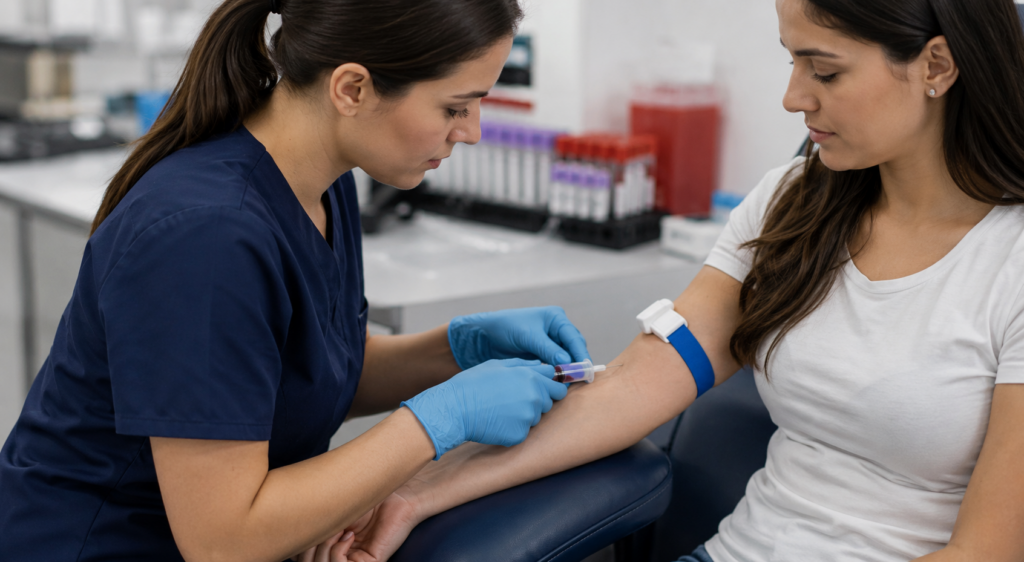
A phlebotomist is a trained healthcare professional who collects blood from patients and donors for laboratory testing, transfusions, medical research, and blood donations.
Blood test results influence roughly 70% of healthcare decisions, which means accurate specimen collection is an important first step in diagnosing illnesses, monitoring treatments, and determining appropriate patient care.
Your Path to Becoming a Phlebotomist
Becoming a phlebotomist isn’t as complicated as many people think. While requirements can vary by employer and state, most people follow the same path to get started.
Training → Certification → Hands-On Experience → Your First Job
Let’s take a closer look at each step.
Step 1: Complete a Phlebotomy Training Program
Before working with patients, you need a solid foundation in blood collection, specimen handling, safety, and patient communication. A structured program helps turn those topics into skills you can use in certification testing and clinical practice.
How ACT supports this step
Build the foundation for certification and entry-level work
The Advanced eClinical Training Certified Phlebotomy Technician Program combines flexible online coursework with simulation-based practice, certification preparation, externship support, and career services.
Outcome figures are provider-reported by Advanced eClinical Training. View ACT’s published outcomes .
Prepare for National Certification
Certification gives employers an independent measure of your knowledge and readiness. It shows that you have completed qualifying training and passed an exam covering the core responsibilities of a phlebotomy technician.
A credential can help turn your training into a clearer hiring signal
Passing a national exam shows that you understand patient identification, blood collection, specimen handling, infection control, and workplace safety.
Many employers prefer or encourage certification because it provides a consistent benchmark when comparing entry-level applicants.
Exam preparation reinforces your training and helps you speak more confidently about procedures, safety standards, and patient care in interviews.
What should you be able to do before exam day?
Sources: National Healthcareer Association and Advanced eClinical Training . Certification and eligibility requirements may change.
Step 2: Prepare for National Certification
Certification gives employers an independent measure of your knowledge and readiness. It shows that you have completed qualifying training and passed an exam covering the core responsibilities of a phlebotomy technician.
Why certification matters
A credential can help turn your training into a clearer hiring signal
Demonstrates competency
Passing a national exam shows that you understand patient identification, blood collection, specimen handling, infection control, and workplace safety.
Meets employer expectations
Certification can help employers verify that you completed relevant training and understand the core responsibilities of an entry-level phlebotomy technician.
Builds professional confidence
Preparing for certification reinforces important knowledge and can help you feel more prepared as you begin working with patients and healthcare teams.
How ACT helps
Certification preparation is built into the curriculum
ACT’s Certified Phlebotomy Technician Program is designed to prepare eligible graduates for the National Healthcareer Association Certified Phlebotomy Technician exam.
- Certification-focused coursework
- Practice exams and knowledge assessments
- Comprehensive checkpoints
- Instructor support and exam review
- Certification exam fee included in tuition
Certification, program and eligibility requirements may change. Confirm current requirements with NHA and ACT before enrolling or applying for an exam.
Step 3: Gain Hands-On Experience
Hands-on experience is where everything starts to come together. After learning the basics in class, you’ll have the chance to practice your skills through simulations and ACT’s externship program, helping you build confidence before working with real patients.
Why practical experience matters
Hands-on practice helps turn classroom knowledge into clinical confidence
Classroom lessons teach the principles behind safe blood collection. Practical experience gives students an opportunity to apply those principles while practicing technique, communication, infection control, specimen handling, and patient safety.
Practice in a supervised clinical environment
ACT’s phlebotomy program includes a clinical externship for eligible students. During the externship, students are required to complete 40 live venipuncture sticks, providing an opportunity to apply blood-collection skills with real individuals under appropriate supervision.
View ACT’s phlebotomy externship detailsBuild technique before working with patients
ACT’s program uses dynamic simulations and interactive skills activities that replicate common patient-care situations. Simulation allows students to practice positioning, equipment selection, procedural steps, and safety routines before progressing to live blood draws.
Learn about ACT’s simulation trainingGain additional exposure to healthcare environments
Depending on local rules and available opportunities, students may also explore volunteer roles with hospitals, community clinics, blood drives, nonprofit health organizations, or public-health events.
Volunteer responsibilities may not include performing blood draws. However, they can provide experience with patient communication, clinical workflows, privacy expectations, teamwork, and professional conduct.
ACT’s hands-on pathway
Move from online instruction to supervised patient experience
ACT combines online coursework with simulation-based activities and an externship pathway. This progression allows students to learn procedures, practice individual skills, receive feedback, and then apply their knowledge in a real clinical setting.
Learn the procedure
Study patient identification, collection equipment, infection control, order of draw, labeling, and specimen handling.
Practice through simulation
Rehearse equipment handling and blood-collection procedures in a controlled learning environment.
Complete the externship
Eligible ACT students complete supervised live-patient practice, including 40 live venipuncture sticks.
Prepare for the workplace
Use practical experience to improve confidence, communication, accuracy, and professional readiness.
ACT coordinates externship placements for eligible students who complete their coursework and satisfy program requirements. Specific facilities, locations, specialties, and schedules may depend on availability and are not guaranteed.
See how ACT’s externship placement worksExternship eligibility, placement locations, clinical requirements, volunteer responsibilities, and program features may change. Students should confirm current details directly with ACT and any participating healthcare organization.
Step 4: Apply for Your First Phlebotomy Job
Build a focused resume
Show employers that you are trained, prepared, and ready to learn
Your first phlebotomy resume does not need to be filled with years of healthcare experience. Focus on the training, certification, clinical practice, and people skills that relate directly to the position.
Make your clinical preparation easy to find
Place your phlebotomy training and certification near the top of your resume. Include your ACT program, externship, clinical skills, successful venipunctures, specimen-handling experience, and any related customer-service or healthcare experience.
Phlebotomy Clinical Externship
Completed supervised venipuncture practice while following
patient-identification, infection-control, labeling, and
specimen-handling procedures.
Prepare examples, not just short answers
Interviewers may ask how you would calm a nervous patient, handle a difficult blood draw, prevent identification errors, or respond when you need assistance. Use examples from your ACT coursework, simulations, externship, or previous customer-service experience.
Briefly explain the situation, describe the steps you took, and finish with the result or what you learned.
Technical skill is only part of the job
Employers also look for dependability, clear communication, careful documentation, respect for patient privacy, and the ability to remain calm. Show these qualities in your resume, emails, phone calls, and interview.
Use a professional email address, arrive early, silence your phone, bring copies of your resume, and send a short thank-you message after the interview.
Where to search
Look beyond one type of healthcare employer
Phlebotomists work in several healthcare settings. Search broadly and try related job titles such as certified phlebotomy technician, laboratory assistant, specimen-collection technician, donor-center technician, and mobile phlebotomist.
Hospitals
Search hospital laboratories, inpatient departments, emergency departments, and outpatient testing services.
Medical laboratories
Look for specimen-collection, laboratory-assistant, and patient service center positions.
Physician offices
Smaller practices may value applicants who can communicate well and help with several patient-care tasks.
Clinics
Search urgent care, community health, specialty, and outpatient clinics.
Blood donation centers
Donor centers often emphasize patient comfort, communication, safety, and customer service.
Mobile services
Some employers hire phlebotomists to collect specimens in homes, workplaces, long-term-care facilities, or community settings.
How ACT can help
Turn your ACT training and externship into strong resume examples
Your ACT program experience can give you specific skills and situations to discuss with employers. Instead of simply writing “completed phlebotomy training,” explain what you practiced and how you followed safe clinical procedures.
- Include ACT’s Certified Phlebotomy Technician Program in your education section.
- Describe your simulation-based practice and supervised externship experience.
- Mention patient identification, venipuncture, order of draw, labeling, infection control, and specimen handling.
- Use examples from your training when answering behavioral interview questions.
- List your national certification or write “certification pending” when appropriate.
Do not only list “40 venipunctures.” Add context by explaining that they were completed during supervised clinical training while following patient-safety and specimen-handling procedures.
Job outlook figures, wage data, employer requirements, program features, and certification expectations may change. Review current job postings and confirm program information directly with ACT.
FAQs about How to Become a Phlebotomist
The time it takes to become a phlebotomist depends on the training program you choose. ACT’s Phlebotomy Technician Program can be completed in as little as 8 weeks, followed by hands-on clinical training and preparation for national certification
Certification isn’t required in every state, but many employers prefer or require it. ACT’s Phlebotomy Technician Program is designed to prepare eligible graduates for the National Healthcareer Association (NHA) Certified Phlebotomy Technician (CPT) exam.
Yes. Many students begin phlebotomy training with no previous healthcare experience. ACT’s program is designed for beginners and teaches blood collection techniques, patient communication, infection control, and other essential skills.
Many programs allow you to complete classroom instruction online. However, you’ll still need hands-on clinical practice or an externship to develop blood-drawing skills and meet many certification requirements. ACT combines online coursework with simulation-based learning and supervised clinical experience.
Phlebotomists work in hospitals, physician offices, medical laboratories, outpatient clinics, blood donation centers, and other healthcare facilities where blood specimens are collected and processed.
A phlebotomist is trained to collect blood samples. A Certified Phlebotomy Technician (CPT) has also met certification requirements and passed a national certification exam. ACT’s program prepares eligible students for the NHA CPT exam
Learn From Expert MD, PA, DNP & RN Instructors
Learn from experienced physicians, physician assistants, advanced practice nurses, and registered nurses who bring clinical expertise and real-world healthcare experience into your training.
ACT instructors provide personalized support to help you master clinical concepts, prepare for CCMA certification, and build confidence for real patient care.
- One-on-One Instructor Support
- Live Virtual Office Hours
- Interactive Clinical Case Discussions
- CCMA Certification Exam Preparation
- Personalized Feedback & Academic Guidance
- Clinical Skills & Externship Readiness
- Pre-Health Mentorship with MD & PA Advisors